
Bitcoin Price Surges Above $102,400 as January Gains Momentum
Bitcoin's price reached over $102,400 early in the new year, fluctuating around $101,750 by 2 pm ET, marking a nearly 9% increase from the previous week.
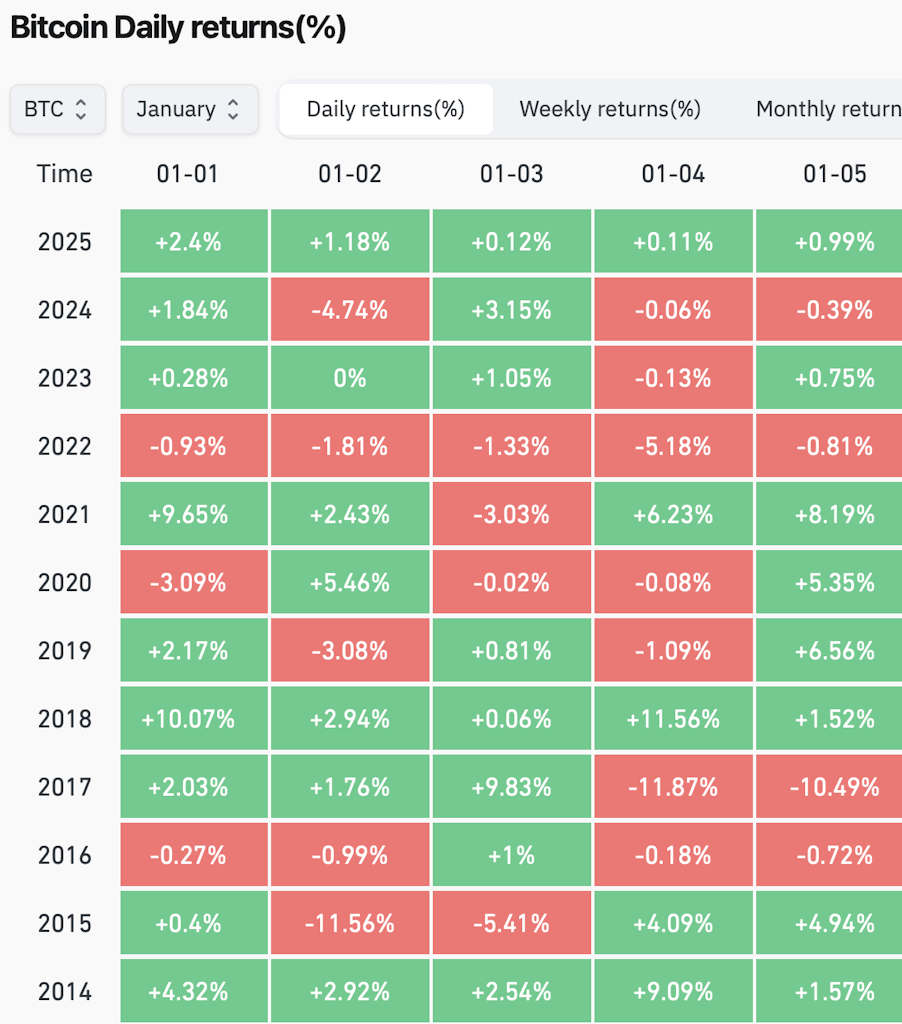
The cryptocurrency is experiencing its own “January effect,” characterized by potential price rises in January. CoinGlass data indicates that Bitcoin saw slight gains during the first five days of the month, a trend not observed since 2018.
Bitcoin previously peaked at an all-time high of $108,000 following Trump’s election win, followed by a correction that saw it drop below $92,000 on December 30 due to hawkish Federal Reserve signals and profit-taking.
Rayhaneh Sharif-Askary from Grayscale noted that temporary drawdowns are common in bull markets, citing a 6% decline in the FTSE/Grayscale Crypto Sectors Market Index in December. She highlighted strong demand for US-listed Bitcoin ETPs and purchases by companies like MicroStrategy as factors supporting Bitcoin's price.
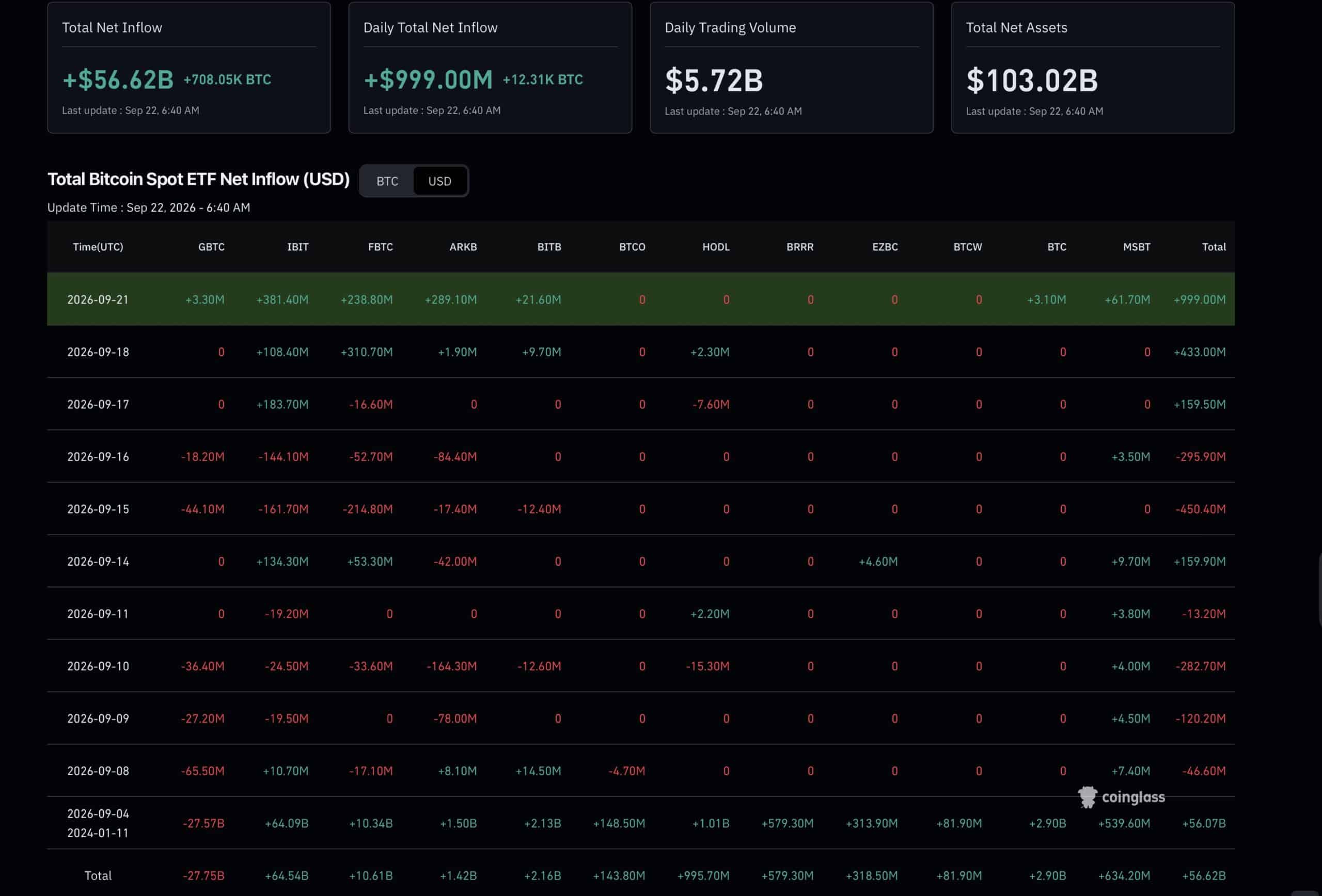
US bitcoin ETFs attracted $908 million in net new assets on Friday, recovering from previous outflows totaling $940 million over four trading days, according to Farside Investors data.
A Bitwise survey revealed that 96% of financial advisers received crypto-related inquiries from clients in 2024, correlating with anticipated capital flow into the crypto sector driven by wealth managers.
MicroStrategy recently purchased 1,070 BTC for approximately $100 million and plans to raise $2 billion through perpetual preferred stock offerings to acquire more Bitcoin. Metaplanet CEO Simon Gerovich announced intentions to increase his company's holdings from 1,762 BTC to 10,000 BTC in 2025. KULR Technology Group also reported an additional $21 million investment in Bitcoin.
Upcoming events include Trump's inauguration and congressional hearings regarding cabinet nominees, which may influence Bitcoin's price depending on regulatory developments. Sharif-Askary indicated that delays or restrictive policies could negatively affect market sentiment, while macroeconomic factors such as interest rate changes and responses to a stronger US dollar may also play a role.