Dec 15, 2025
4 0
Bitcoin Faces Rising Structural Risk Amid Quiet Price Action and Liquidity Issues
Bitcoin's Current Market Dynamics
- Bitcoin remains below the $90,000 level, with bulls defending existing demand zones amidst a consolidation phase.
- Volatility is low, suggesting a market pause, but this may not indicate stability.
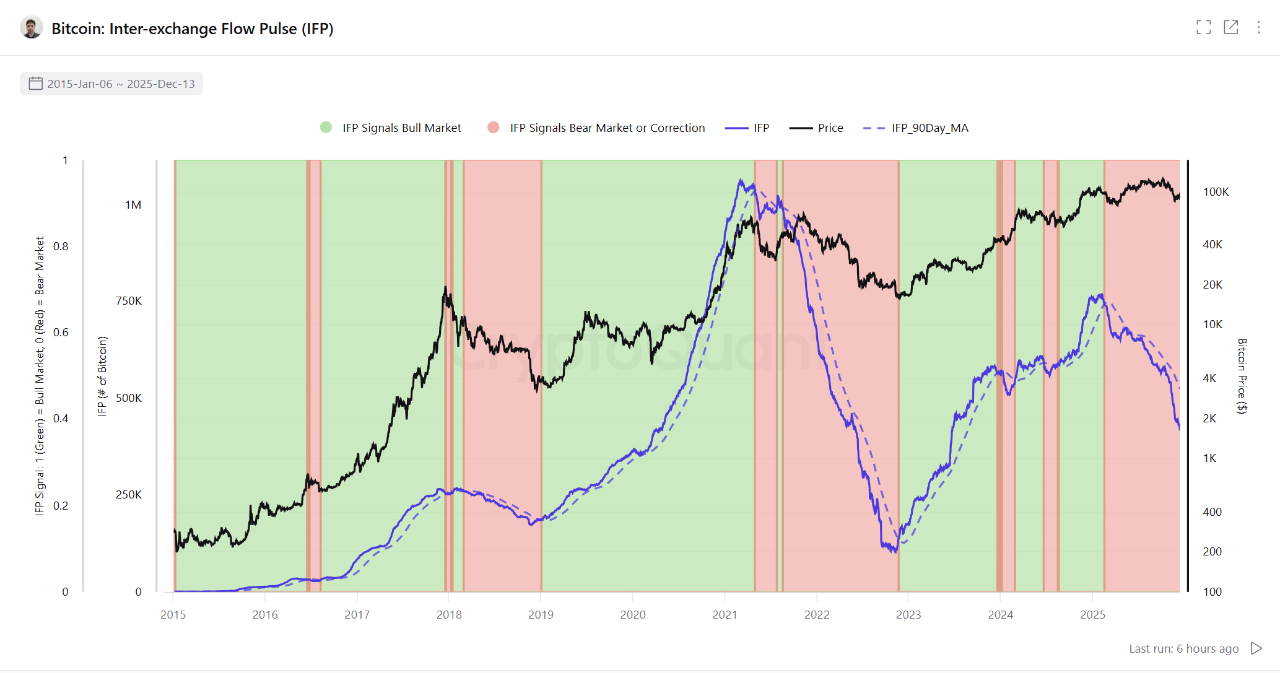
- The Inter-Exchange Flow Pulse (IFP) has turned red, highlighting structural risks and deteriorating liquidity conditions.
- Reduced exchange balances can limit selling pressure but increase the impact of sudden demand or forced liquidations.
Inter-Exchange Flow Pulse Insights
- The IFP measures Bitcoin movement between exchanges, indicating market liquidity and capital circulation.
- A decline in IFP suggests weakened liquidity, leading to increased price sensitivity and volatility.
- Low exchange balances create thinner order books, making markets more volatile during decisive price movements.
- With high leverage in derivatives markets, current instability is driven by forced reactions rather than directional conviction.
Price Consolidation and Moving Averages
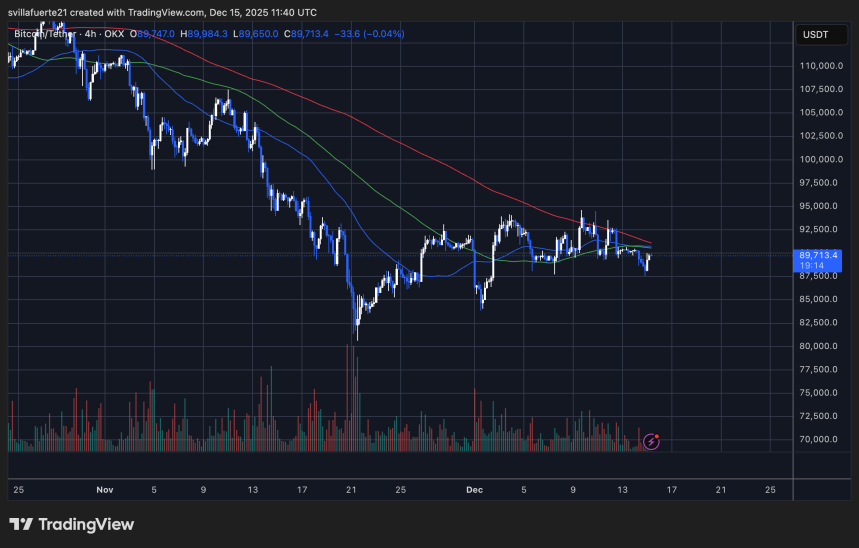
- Bitcoin is consolidating after a corrective move, currently trading around $89,000–$90,000.
- The 200-period moving average on the 4-hour chart acts as resistance, with the 50 and 100 averages also sloping downward.
- Volume contraction indicates reduced trader participation, often preceding increased volatility.
- Structural vulnerability persists as long as Bitcoin trades below the $92,000–$94,000 resistance zone.
- Support is identified in the $87,000–$88,000 range; a breakdown could lead to further declines toward $84,000.