Solana released developer changelog with faster JavaScript builds, validator updates
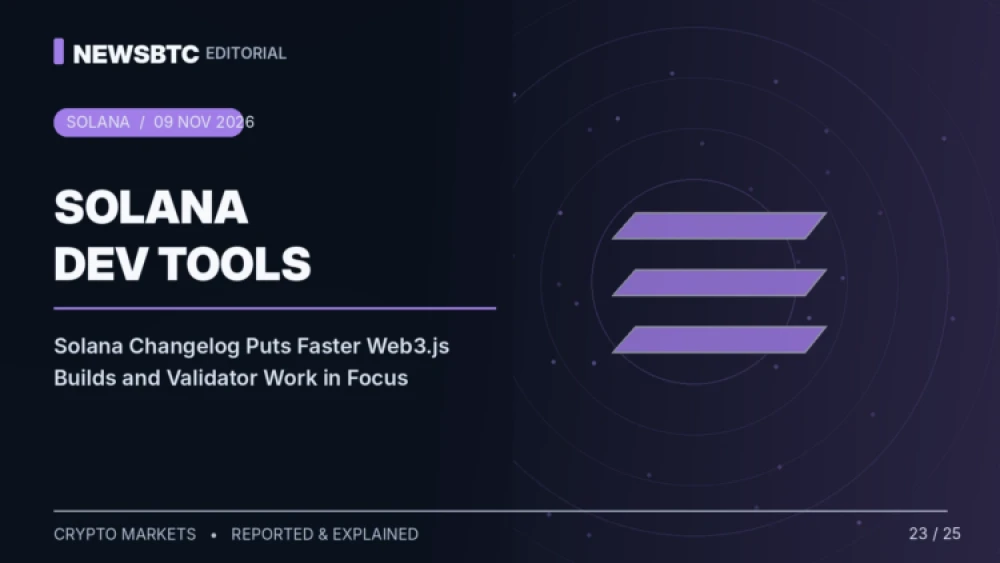
TL;DR: Solana’s November 5 developer changelog lists incremental improvements across tooling and validator operations: faster JavaScript SDK builds using Rolldown, updates to validator clients and execution handover, and enhancements to developer tooling. These changes can improve developer productivity and infrastructure reliability. A published changelog entry does not mean the change is active on mainnet.
Why a build-system improvement matters
The JavaScript SDK build process using Rolldown shows an internal benchmark reduction from about two seconds to near zero. The gain applies to the described workflow and benchmark. The likely impact: faster library builds, tighter test cycles and quicker releases for teams maintaining many packages. End-user performance depends on downstream adoption and whether similar gains carry into specific projects.
Validators remain part of the engineering story
The changelog references work on the Agave validator client, typed interfaces and elements of Firedancer leader handover. These target reliability, interoperability and coordination between validator implementations. A changelog note is not evidence that validators have deployed the changes or that a network feature has passed activation checks. Operators require release notes, configuration guidance and rollout schedules.
The tooling ecosystem goes beyond the core client
Updates include improvements around Anchor, RPC tools and local development environments such as Surfpool. Anchor underpins many Solana programs and RPC services connect wallets, applications and analytics to the chain. Optimizations in account allocation and local testing can reduce developer errors and save time. Security review, careful transaction handling and capacity planning remain necessary. Because applications span multiple layers, weaknesses at the RPC or front-end layer can still affect users even when core consensus operates normally.
Performance claims require context
Benchmarks depend on hardware, software versions and task scope. An SDK build benchmark is not a transaction-per-second metric. Validator handover work does not imply zero outages. Clear separation of categories clarifies what has improved. Adoption signals should appear over time in developer retention, simpler deployments and more dependable applications and should be measured rather than inferred from a release note.
The signals to track next
Key indicators: adoption in major tools, reproducible performance measurements, reduced operational incidents for application teams and node operators. Developers can track repositories, testing results and rollout notices for each change. The November update reflects continuous ecosystem maintenance that supports more demanding financial applications over time.
Primary source: Solana developer changelog. Additional context: NewsBTC’s review of October development milestones.
This article was written by the News Desk and edited by Samuel Rae.
Authors credited by the source: NewsBTC Editorial Team
Published by Holder based on an external source.