Antpool sent 2,077 BTC to exchanges, largest since February 2026
Bitcoin demand weakened as miners increased transfers to exchanges. CryptoQuant recorded 2,077 BTC in miner-to-exchange flows on November 10, about 16 times the 30-day daily average of 127 BTC. The network is approaching an estimated 8% mining difficulty reduction. The combination of larger miner transfers and declining spot and derivatives demand signals rising supply pressure with limited absorption capacity.
Bitcoin's Rebound Fades as Spot Demand Weakens and Miner Flows Surge
“Leverage is being unwound, but spot demand has not recovered sustainably.” – By @xwinfinance pic.twitter.com/n03axjQKqt
— CryptoQuant.com (@cryptoquant_com) November 13, 2026
Antpool Sends 2,077 BTC to Exchanges in Biggest Miner Transfer Since February

Bitcoin Miner Flows
The 2,077 BTC transfer was the largest daily miner-to-exchange movement since February 2026. Approximately 97% of the coins originated from Antpool, one of the largest mining pools. The scale exceeds the 30-day average of 127 BTC.
CryptoQuant’s Miner to Exchange Flow tracks transfers rather than executed sales. Miners move coins to exchanges to fund operations, manage treasuries or reposition reserves. The data indicates higher available selling supply, not confirmation that 2,077 BTC were sold.
Bitcoin Demand Dries Up as Spot Buyers Retreat and Futures Selling Intensifies
Demand-growth indicators turned negative across spot and perpetual futures. CryptoQuant estimated spot demand at about -280,000 BTC and perpetual futures demand at about -82,000 BTC, producing a combined negative reading near -362,000 BTC. Spot demand reflects underlying market activity, while perpetuals indicate speculative positioning. The readings show buying activity has struggled to absorb supply.
If miner transfers persist while spot demand remains weak, additional downward price pressure is likely. These indicators measure changes in estimated demand rather than a direct tally of Bitcoin sold.
Bitcoin’s next difficulty adjustment is expected around November 14 at block 975,744. Difficulty may drop by roughly 8.4% after average block times increased to 655 seconds. The protocol adjusts every 2,016 blocks, roughly every two weeks, to maintain a 10-minute target. Slower production reduces difficulty, which can raise BTC yield per unit of power. Profitability remains a function of electricity costs, hardware efficiency, fees and BTC price.
What Comes Next for Bitcoin? $69,000 Level Is Under Pressure
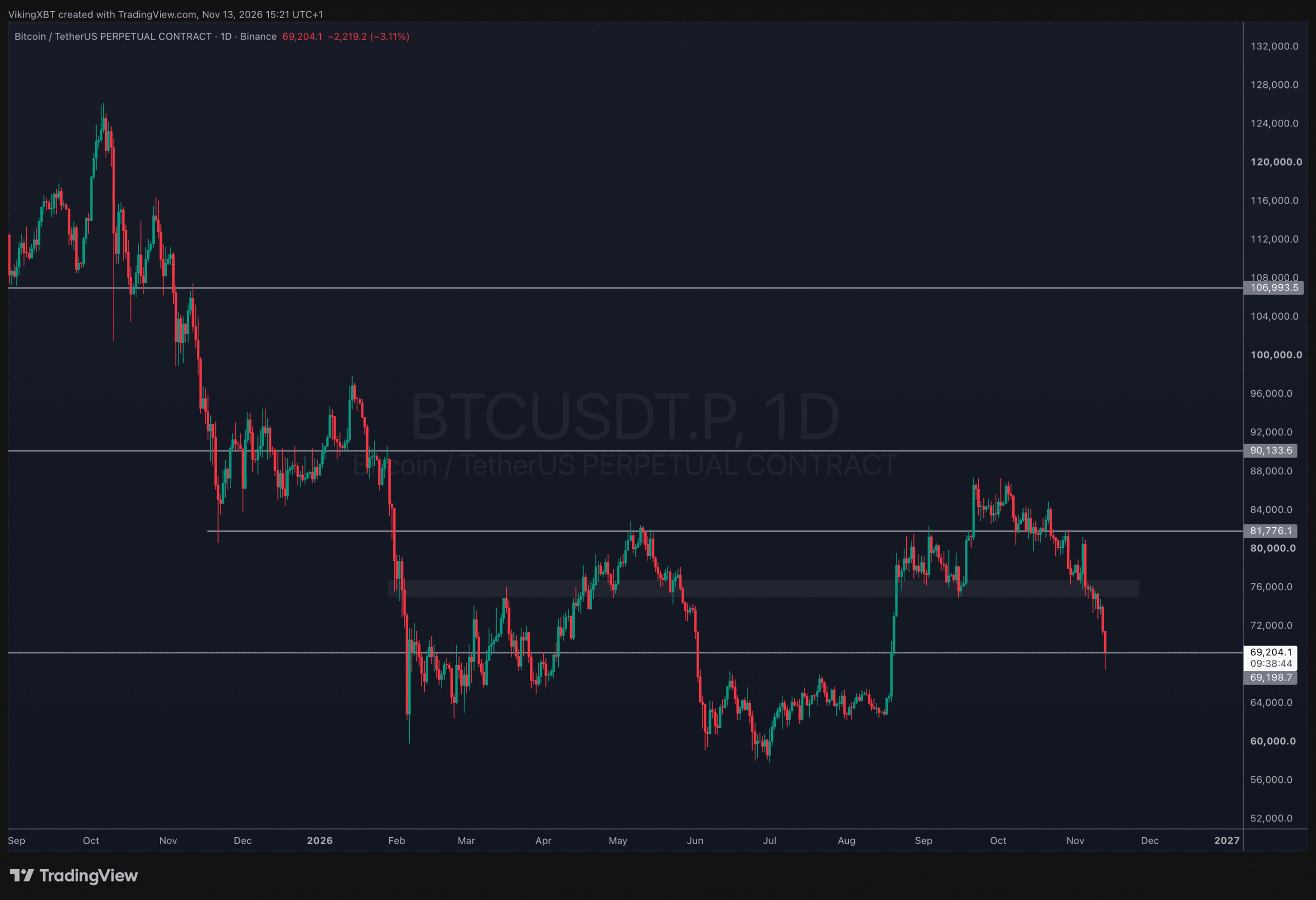
BTCUSDT Chart 1D Source: TradingView
Bitcoin trades near $69,200 after a sharp daily decline. The price broke below the $75,000–$76,000 support zone, which now acts as resistance. The immediate level is $69,000. A sustained break below this level could expose $64,000–$65,000, then $60,000. Reclaiming $75,000 would signal a potential recovery and improve the short-term outlook.
Rising miner-to-exchange transfers and negative demand indicators indicate a market with limited buying interest. The upcoming difficulty reduction could improve mining conditions and help operators manage costs, but it does not address the current demand weakness. Key variables: whether exchange transfers translate into actual selling and whether spot-market demand returns to absorb additional supply.
Authors credited by the source: Daniel Francis
Published by Holder based on an external source.