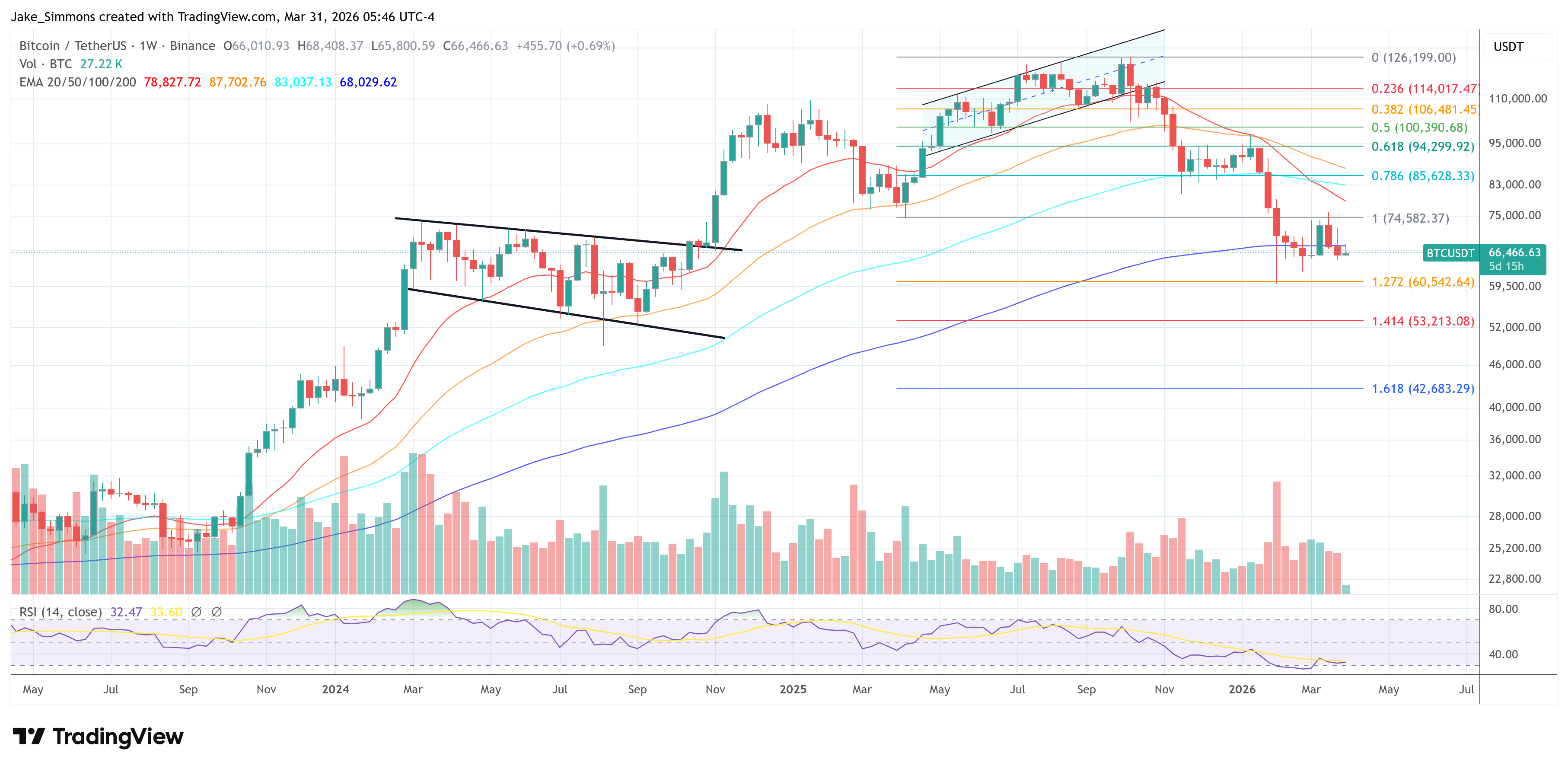

Jordi Visser says Bitcoin will benefit from Fed inflation dilemma
Visser says the Fed is stuck in a new “D.O.G.E. 2.0” trap. He argues this brings Bitcoin’s original purpose back into focus. Source.
He outlines four pressures that box in policy. Debt, oil, growth, employment. Visser’s note.
- Debt as the structural constraint Visser
- Oil as the inflation shock NewsBTC on oil shock
- Growth as the casualty of tighter conditions Visser
- Employment likely to take precedence in the mandate Visser
He starts with supply strains. Oil rose after the Iran war disrupted Hormuz flows. AI demand lifted memory-chip costs. “Rate hikes do not reopen Hormuz. They do not create more DRAM.” War impact on oil Visser.
The 1970s comparison breaks on debt. He cites federal debt near 122.5% of GDP today versus ~35.5% in 1970 and ~31.6% in 1979. He adds market-cap-to-GDP above 200% now, versus ~42% in 1975 and ~38% in 1979. The system is more levered, and more financialized. Visser.
Jobs data matters in his view. He points to February 2026 payrolls down 92,000, unemployment at 4.4%, flat net jobs in 2025, and slower wage growth from 2023 peaks. That weakens the case for a harsh inflation fight. Visser Context on prior tightening.
He says the Fed is signaling that stance. Powell on March 18 noted energy can lift near-term inflation but central banks often “look through” energy shocks if expectations hold. Vice Chair Jefferson warned persistently higher energy hurts inflation and spending. Visser’s citations.
This is where Bitcoin returns. He ties its 2008–09 origin to a system reliant on bailouts and expanding guarantees. “The message was unmistakable.” Visser.
He concludes Bitcoin’s thesis does not need hyperinflation. It needs markets to assume each inflation fight ends faster, easing comes sooner, and high debt forces accommodation. NewsBTC context Visser.