
Bitcoin holds $76k–$80k range as oil and yields jump
Bitcoin traded at $77,537.68, down 1.47%, on September 2, 2026. Price remained within a $76,000–$80,000 range while WTI crude futures rose above $90 per barrel, up about 9% for the week, and the US 10-year Treasury yield climbed 10 basis points to 4.81%, the highest since 2023.
This cross-asset setup shows divergence: oil and yields rose, risk assets weakened, yet Bitcoin’s range held. The narrative highlights relative resilience in Bitcoin, with a strengthening US dollar identified as the main risk to sustaining the range.
Mechanism Breakdown: Oil, Yields and the Dollar Squeeze
Higher oil prices are adding inflation pressure and constraining the Federal Reserve’s scope to cut rates. Rising long-term yields, attributed to fiscal concerns rather than growth, are tightening financial conditions. The US 10-year reached 4.81% alongside declines in the S&P 500 and pressure on Asian equities due to increased macro risks for energy importers. Bitcoin fell roughly 3% to just under $77,000, then stabilized inside $76,000–$80,000.
One interpretation: fiscally driven yield increases can lift demand for hard assets outside the fiat system. Prior observations have linked Bitcoin’s sensitivity to rate expectations with ETF outflow episodes, though the report does not provide current flow data.
Oil is following the mapped path so far. ✅
Still targeting $101.50 – $106.
Lower after.Bulls flipped the trendline of the March high and price is now trading above all the major SMAs and EMA again.
Last time I said to watch $91.28.
Right now we see the… https://t.co/TAZk7h1zgy pic.twitter.com/Hdulb7vYjY— Market Wave Investor (@MWi_EW) September 2, 2026
Gold’s Slide Complicates the Safe-Haven Story, as Bitcoin Shines
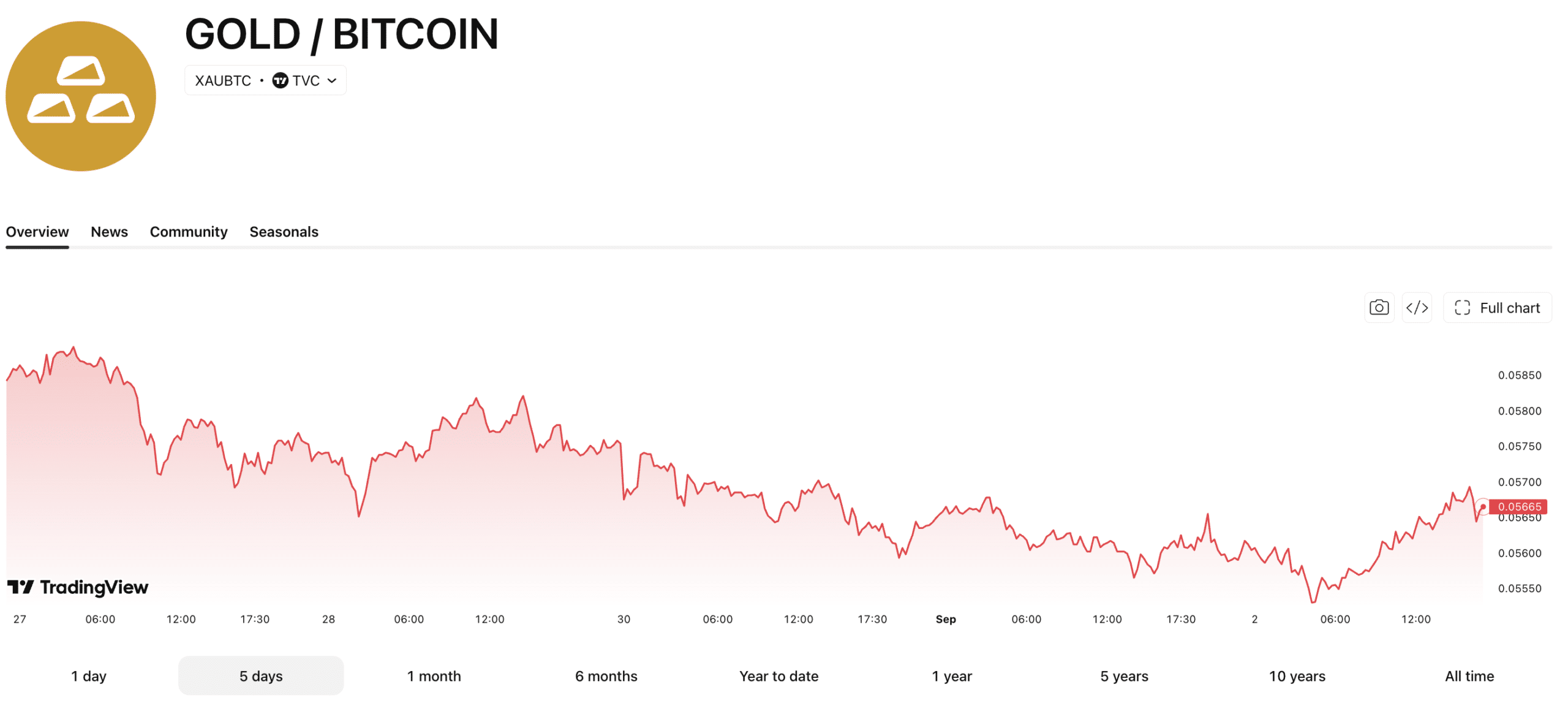
Gold declined from $4,700 to $4,300 per ounce in under a week as fiscal and inflation concerns intensified, according to CoinGecko. This weakens a simple rotation-to-hard-assets explanation. Bitcoin’s stability as gold, stocks, and bonds faced pressure supports a relative-resilience view but does not establish decoupling or confirm ETF-driven support. The cited sources do not supply flow data. A comparative history of gold-linked funds and Bitcoin ETFs offers context on how the assets have diverged in past volatility: link.
The Dollar Is the Variable That Decides the Next Move
Bull case: Bitcoin holds its range despite $90 oil, a 4.81% 10-year yield, and declines in gold and equities, indicating absorption of macro stress. Bear case: a stronger US dollar weighs on Bitcoin due to their historical inverse correlation, with the Dollar Index nearing a long-term bullish trendline from 2011 that could trigger a bounce.
Key signals to track: Bitcoin’s retention of the $76,000–$80,000 range, persistence of higher WTI and long-duration yields, and confirmation of a Dollar Index bounce off the 2011 trendline. These will clarify whether Bitcoin’s firmness reflects genuine resilience or delayed adjustment to broader market pressures.
Bitcoin Hyper Targets Early Mover Upside as Ethereum Tests Key Levels
BitMine’s buying supports a long-term ETH thesis. With a $14.63 billion treasury and a market value that reflects institutional demand, the asymmetry of upside has narrowed. Some traders seeking earlier-cycle exposure are shifting focus to Bitcoin’s infrastructure buildout.
Bitcoin Hyper ($HYPER) is presented as a Bitcoin Layer 2 with Solana Virtual Machine integration, aiming for execution speeds above Solana’s while settling on Bitcoin’s base layer. The presale raised $33,092,631.38 at a token price of $0.0136855, with staking rewards described as high APY without a stated rate. Its Decentralized Canonical Bridge targets Bitcoin’s programmability gap, slow transaction speeds, high fees, and absence of native smart contracts.
Don’t Miss Out Again: Join New Bitcoin Layer 2 Early Here
DISCOVER: Best Meme Coins to Buy in 2026
The post appeared first on Coinspeaker.