
Trump rejects Iran proposal, Brent rises to $106, WTI to $94
Traders saw a sharp jump in oil on Monday, September 28. Brent futures rose $2.60, or 2.49%, to $106.92. West Texas Intermediate gained $2.08, or 2.25%, to $94.49. The move followed President Donald Trump’s rejection of an Iranian proposal to resolve the Strait of Hormuz conflict and reopen the waterway to shipping.
The macro transmission to crypto: higher crude lifts headline inflation, which can push Treasury yields up or delay central bank easing. Tighter financial conditions reduce leverage and weigh on high-beta assets, including Bitcoin. The full chain is not yet confirmed in market data.
Flows and risk pricing: preliminary Kpler data shows Middle East crude exports rebounded to 12.8 million barrels per day in September, the highest since the war began in February. Hormuz flows were on track for about 7.4 million barrels per day. Prices appear to reflect disruption risk rather than current shortage.
How could a $106 oil shock hit Bitcoin liquidity?
- Mechanism: higher oil → higher inflation → higher yields or delayed easing → tighter liquidity → less leverage in risk assets and crypto.
- Confirmation pending: watch whether inflation expectations and yields rise in tandem with crude.
Prediction market oil: what will the price be before the end of the month?
Prediction Market Oil
Polymarket pricing:
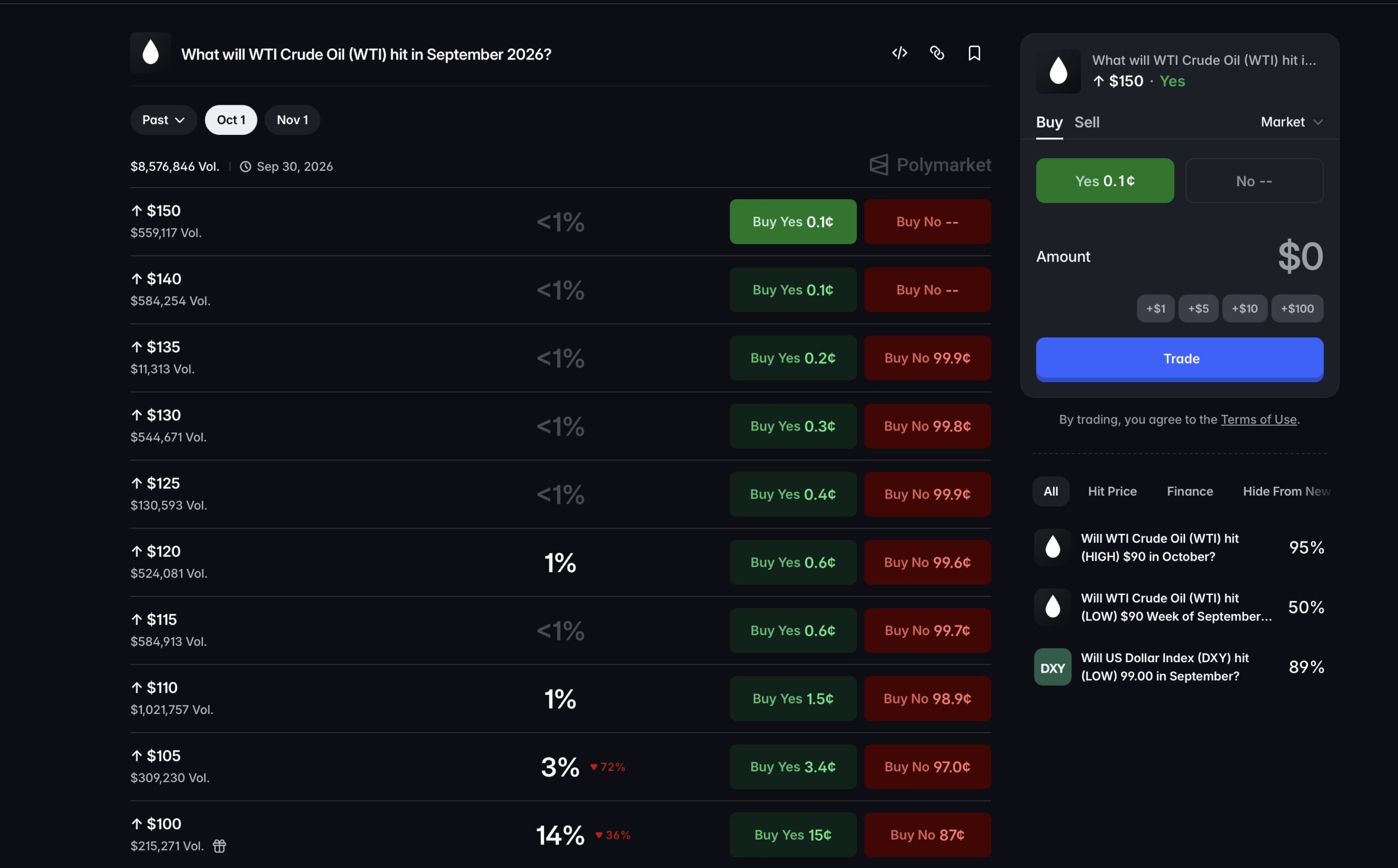
- WTI September high ≥ $100 by Sep 30: 14%
- ≥ $105: 3%
- ≥ $110: 1% or less
Related contracts:
- WTI hits $90 in October: 95%
- US Dollar Index touches 99.00 this month: 89%
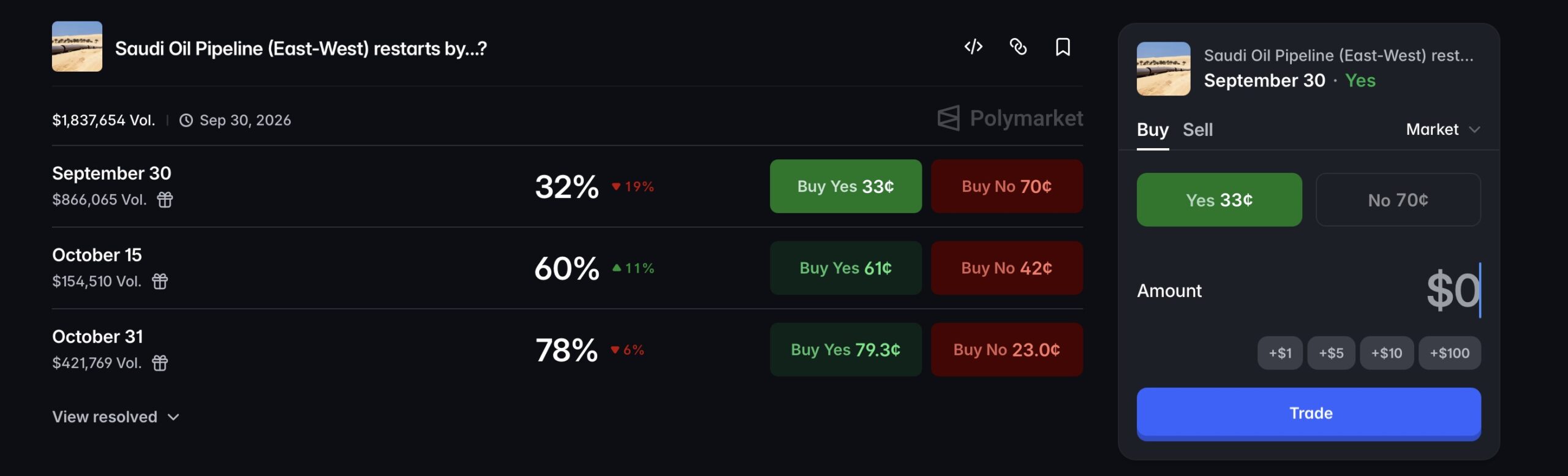
- Saudi East-West pipeline restart: 32% by Sep 30, 78% by Oct 31
Capital Economics view and the diplomatic wildcard
Hamad Hussain, Capital Economics: Monday’s jump was driven by Trump’s rejection of Iran’s proposal. Greater throughput via Hormuz is easing some pressure, but the broader oil market remains in deficit, implying a structural price floor under Brent. Trump told Axios he expects further U.S.-Iran talks this week despite rejecting the current plan, keeping diplomacy active and capable of reversing the premium quickly.
Bull and bear paths for risk assets
- Less bearish path: continued U.S.-Iran talks and normalization of Hormuz shipments reduce the geopolitical premium, easing pressure on inflation expectations and rates.
- Bearish path: renewed disruption, such as missile or drone incidents, sustains a market deficit, keeps Brent high, and maintains inflation risk.
PolymarketPolymarket
Monitoring set:
- Energy: Brent, WTI, Middle East export volumes, Hormuz throughput
- Rates and FX: Treasury yields, US Dollar Index, inflation expectations
- Credit and volatility: credit spreads, equity volatility
- Crypto microstructure: Bitcoin futures open interest, funding rates, liquidations
Evidence does not support a specific Bitcoin price target or scenario probability. The key distinction: a one-day geopolitical premium versus a persistent energy shock that simultaneously lifts bond yields and tightens dollar liquidity. Upcoming U.S.-Iran talks and any new Hormuz-related disruption are the immediate catalysts.