
BTCS repays $8.2M Aave debt, cuts DeFi leverage in Q2
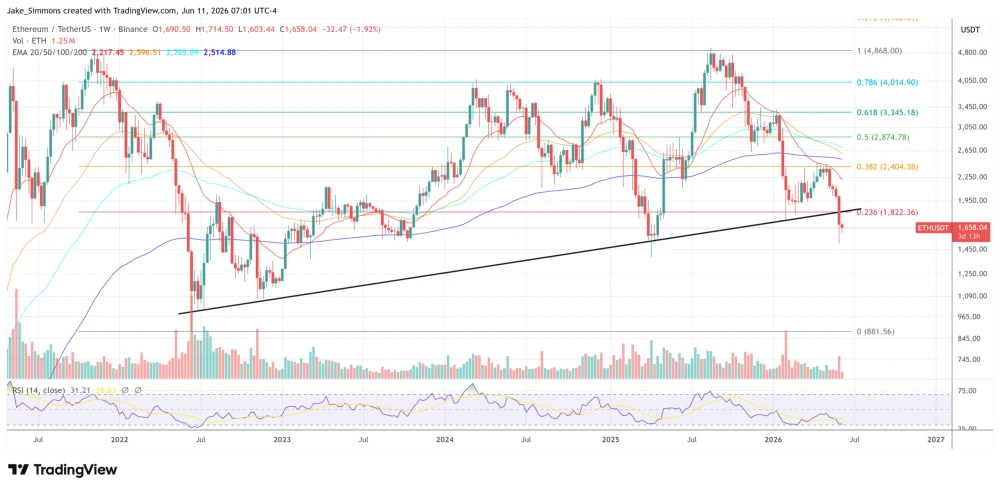
BTCS Inc. reduced DeFi leverage in Q2 2026 by repaying $8.2 million to Aave while maintaining significant on-chain borrowing and digital-asset exposure. The company ended the quarter with $317,113 in cash and stablecoins and reported $36.0 million in outstanding loans to DeFi protocols. These figures reflect a treasury strategy centered on Ethereum, staking, and DeFi, not insolvency or protocol failure.
Key figures
- $8.2 million repaid to Aave during Q2 2026
- $317,113 cash and stablecoins at quarter-end
- $36.0 million outstanding loans payable to DeFi protocols
How corporate crypto treasuries are evolving
Public crypto-exposed companies increasingly combine staking, on-chain borrowing, validator operations, and token holdings with traditional assets and liabilities. BTCS operates within this model, using crypto-native infrastructure while disclosing through public-company filings. This increases transparency and complexity for investors analyzing leverage, collateral, and on-chain credit exposure.
Why the Aave repayment is notable
Aave is a major DeFi lending protocol. The $8.2 million repayment indicates an active effort to reduce leverage, lowering liquidation risk and simplifying the balance sheet amid volatile Ethereum and DeFi markets. It also underscores that corporate financial positions can hinge on collateral values, interest rates, liquidity, and liquidation thresholds determined on-chain.
Interpreting the cash figure
The $317,113 cash and stablecoin balance is small relative to traditional reserves but must be viewed alongside digital assets, staking positions, and DeFi liabilities. Low cash can constrain flexibility if expenses rise or liquidity weakens. The data indicates most value remains tied to digital assets and DeFi positions rather than cash.
DeFi leverage enters public markets
DeFi borrowing now appears in public-company filings, requiring investors to assess collateralization, liquidation parameters, protocol debt, staking lockups, and smart-contract risk in addition to token balances. BTCS illustrates this shift.
What to monitor next
Upcoming filings will show whether BTCS continues deleveraging or rebuilds DeFi exposure as market conditions change. Lower debt would indicate a conservative posture. Higher borrowing would increase sensitivity to Ethereum prices and protocol conditions.
Source: BTCS Inc. Q2 2026 Form 10-Q and related disclosures at SEC EDGAR. Article credits: News Desk; editor: Samuel Rae.
Authors credited by the source: NewsBTC Editorial Team
Published by Holder based on an external source.