Clichmont builds AI data centers to control power and economics
Spokesperson: Alexis Cathalifaud, CEO
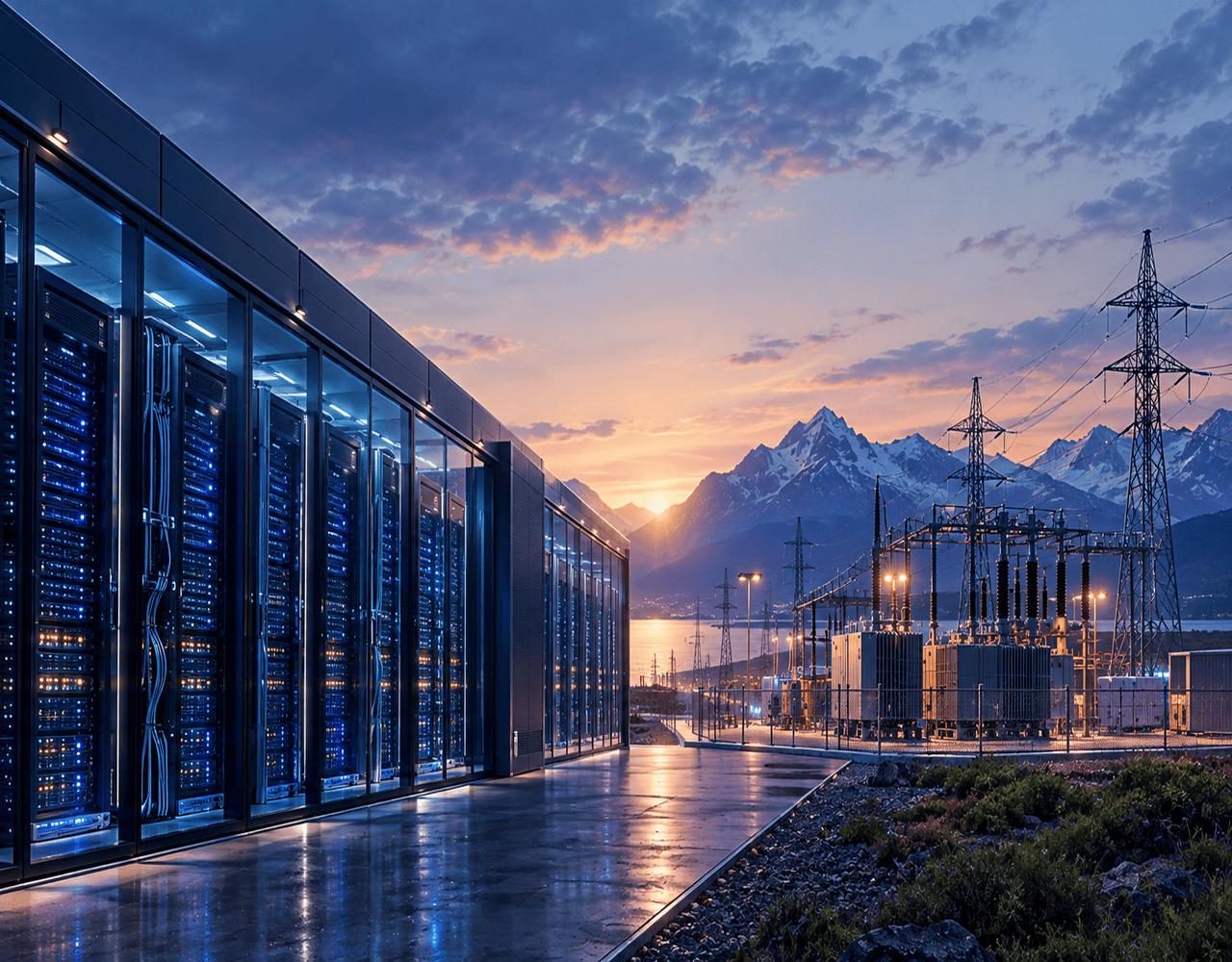
Clichmont positions infrastructure ownership as the strategic lever for AI compute: control over power, data-center capacity, cooling and connectivity. The company prioritizes long-lived, power-ready facilities over rented GPUs, arguing that the durable bottleneck is energizing and operating accelerators at scale. The $CLAI token is framed as a digital layer for governance and ecosystem participation, separate from core infrastructure operations.
Ownership versus rented GPUs
Clichmont argues that renting GPUs yields limited control over pricing, availability and power constraints. Infrastructure ownership enables decisions on GPU selection and upgrade timing, deployment density, power and cooling engineering, and commercialization. GPUs depreciate quickly; power-ready capacity, substations, cooling infrastructure, fiber and permitted megawatts retain value across GPU generations. The scarce resource becomes the capability to energize thousands of GPUs reliably. Securing chips does not solve for tens of megawatts of power, cooling and network requirements.
Market positioning relative to peers
Clichmont credits peers like CoreWeave, Crusoe and Lambda for validating demand. Its thesis differs: long-term scarcity resides in power, land, cooling and connectivity. The company aims to own and control infrastructure for successive GPU generations rather than focus primarily on renting latest-generation chips.
Energy as the core constraint
Energy availability guides site strategy: reliability, cost, scalability and time-to-power. Key filters include grid conditions, climate for cooling, and support for next-generation GPU power densities. The company prioritizes locations with strong energy fundamentals and emphasizes that compute must locate where energy is available.
Site selection: integrated constraints
Decisions weigh power capacity and delivery timelines, cooling design and local climate, fiber connectivity, land, permitting, security and expansion headroom. Examples: Bodø, Norway for efficient cooling and robust energy; Alicante for integrating solar into the energy mix. Land without scalable power or fiber is excluded; the focus is converting sites into reliable and economically competitive compute capacity.
$CLAI token rationale
$CLAI is described as a digital economic layer for on-chain participation, treasury activity and community governance, distinct from equity. The company sets a standard: the physical infrastructure must stand independently of the token, and the token must provide measurable utility beyond speculation or what a conventional database and corporate structure can deliver.
Scaling physical infrastructure
Physical capacity expansions depend on grid capacity, transformers, switchgear, cooling, fiber, permits, construction and hardware. Dependencies often misalign: land may precede power, buildings may precede grid connections. Errors are costly and slow to reverse. Execution centers on sequencing capital, power, construction and demand to coincide, avoiding idle assets or missed market windows.
Risk profile of build-own strategy
Main risk: capital intensity combined with timing. Ownership reduces optionality compared to rental models, which can pivot capacity and vendors. The danger lies in building the wrong capacity in the wrong place or time. Clichmont targets control of strategic infrastructure with flexibility across GPU generations so that buildings, power and cooling survive multiple hardware cycles.
Three-year outlook
Objective: operate as an efficient, independent AI infrastructure provider in Europe with secured power, high-density GPU capacity and rapid deployment track record. Strategy focuses on selective locations with sound energy economics and designs that support accelerated computing for enterprise AI, HPC and private compute rather than competing solely on GPU rentals.
Conclusion
Clichmont’s thesis: GPU access remains necessary, but the ability to power, cool, connect and operate GPUs efficiently at scale is the durable advantage. The approach requires significant capital and precise execution across power, construction and hardware timelines. Outcomes depend on timing and disciplined delivery.