
Hackers mint IBS tokens and drain $5.7 million from POTS Money
The POTS Money protocol on BNB Chain suffered an exploit that drained about $5.7 million in USDT from the IBS/USDT liquidity pool on PancakeSwap and collapsed the value of its IBS token.
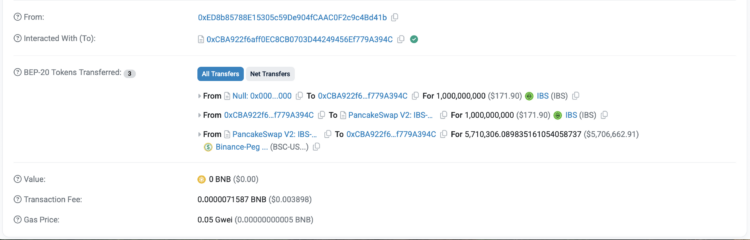
- An account with elevated governance permissions minted one billion new IBS tokens, according to Blockaid, and sold them into the IBS/USDT pool, extracting about $5.7 million in USDT.
- IBS, intended to maintain a minimum value of $1 through collateral reserves and an algorithmic mechanism, fell to roughly $0.00000008 within an hour as its primary trading liquidity was depleted.
- Locked liquidity restricted direct withdrawal by liquidity providers but did not prevent newly minted IBS from being traded against the pool’s USDT, which removed the reserves through normal swap activity.
- On-chain data from Lookonchain linked the exploit to a specific BscScan transaction, and monitoring showed the price collapse in the IBS/USDT market on PancakeSwap.
- The incident highlights that token security depends not only on smart contract code and liquidity locks but also on governance key management and strict controls over minting permissions.
- A March 23 ScaleBit audit had previously identified centralization risks and unlimited minting privileges on POTS Money. It recommended multisignature governance and timelocks; these issues were marked as only partially resolved.
- Security researchers have traced a wallet holding the extracted USDT, but there is no confirmed method to recover the funds, and no verified reimbursement or recovery plan has been published.
- The exploit underscores a broader DeFi risk similar to recent incidents such as the Kava Lend and Fusionist ACE exploits: excessive or insecure minting privileges and governance keys can nullify collateral mechanisms and liquidity protections.
The timeline of the incident: Blockaid detected the minting by a privileged governance account at 04:59 UTC, the new IBS supply was quickly sold into the PancakeSwap pool for roughly $5.71 million in USDT, and by 05:48 UTC IBS was trading near zero. Locked liquidity did not prevent the loss because traders could still swap newly created IBS against the pool’s USDT. The root cause, including how the privileged account was accessed, remains unconfirmed, and the protocol has not released a verified plan for reimbursement or restructuring IBS supply.
Audits by CertiK and ScaleBit show that smart contract reviews were underway, but the exploit illustrates that audit coverage of code does not automatically secure governance keys or operational accounts. Controls such as multisignature authorization, timelocks on critical functions, and strict limits on token issuance are central to protecting liquidity-backed and algorithmic tokens from catastrophic supply expansion.
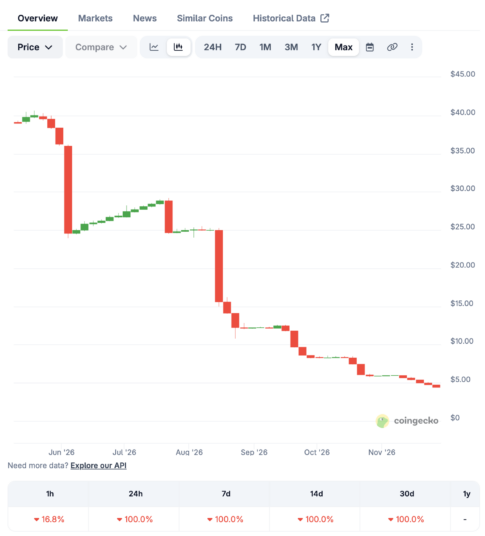
| Time | What happened |
|---|---|
| 04:59 UTC | Privileged governance account mints one billion IBS tokens, flagged by Blockaid |
| Shortly after | Newly minted IBS sold into IBS/USDT pool on PancakeSwap for about $5.71 million in USDT |
| 05:48 UTC | IBS trades at roughly $0.00000008 as liquidity is drained |
Timeline of the POTS Money exploit on Sunday, November 29. Data: Blockaid, Lookonchain, CoinGecko. Visualization: NewsBTC.
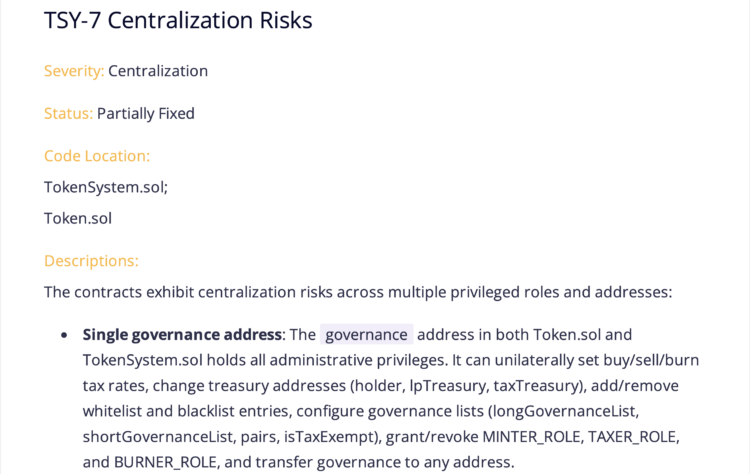
ScaleBit audit excerpt showing partially resolved centralization risks and unlimited IBS minting permissions. Source: ScaleBit, March 2026.
The overall financial impact on individual IBS holders is still undetermined because the amount drained from the pool does not equal aggregate user losses. However, IBS’s price displacement and loss of liquidity indicate significant impairment of the token’s economic design. Restoring quoted prices might be technically possible, but restoring confidence in the governance structure and issuance rules will require clear changes to minting permissions and key management, along with transparent communication on collateral status and any future remediation plan.
Authors credited by the source: Tomás Rivas
Published by Holder based on an external source.