Hyperliquid Strategies deploys $802M, raises HYPE holdings to 38.5M
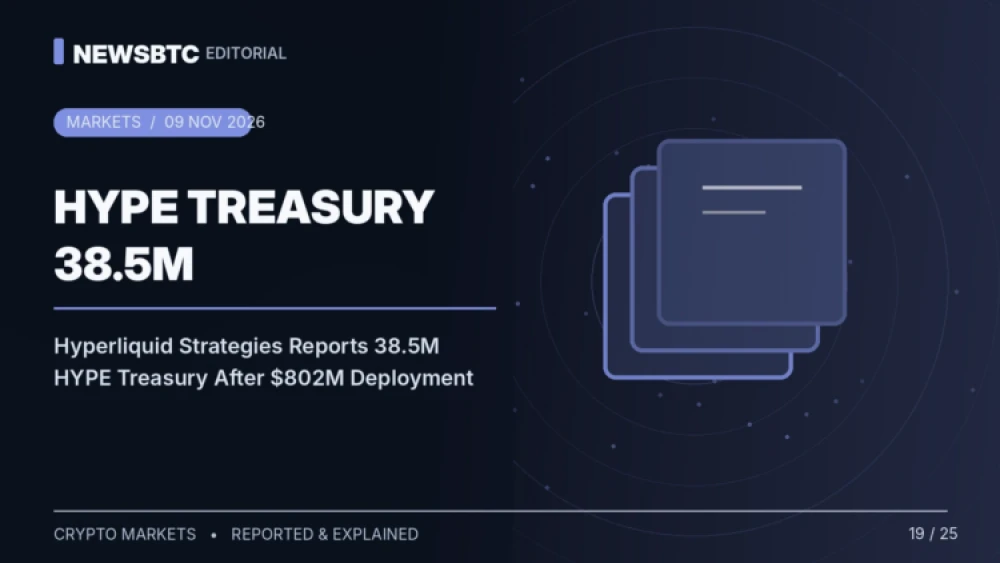
TL;DR: Hyperliquid Strategies reported a HYPE token treasury of 38.5 million as of September 30 after deploying $802 million in the quarter. It raised $911 million in equity under a committed facility, used $785 million to buy 9.1 million HYPE, and spent $17 million to repurchase 2.7 million shares. Cash and cash-like instruments: $254.6 million. Debt: zero. The company is pursuing futures commission merchant authorization. Token holdings and regulated services are distinct exposures with separate risks. Key metrics to track: token count, average purchase cost, shares outstanding, net asset value, liquidity, and FCM progress.
How the treasury grew
The company raised $911 million in equity capital under a committed facility. It deployed $785 million to acquire 9.1 million HYPE, increasing holdings from 29.3 million to 38.5 million tokens. It repurchased 2.7 million of its own shares for $17 million. Token holdings are not cash revenue or quarterly profit. Market value depends on HYPE’s price. Issuing equity to fund purchases changes existing shareholders’ proportional claim.
Why it wants an FCM
An application to become a futures commission merchant has been filed. Authorization is pending and permitted services will depend on approval and applicable rules. Strategy: combine token exposure to the Hyperliquid ecosystem with regulated market infrastructure participation. A token rally does not guarantee regulatory approval or sustainable brokerage economics.
The balance-sheet trade-off
Quarter-end cash and cash-like instruments: $254.6 million. Debt: none. A cash reserve supports operations. Asset concentration in one digital token and the equity facility’s terms add risk. A corporate crypto treasury differs from direct token ownership because the share price reflects expenses, strategy, governance, and investor expectations as well as token prices. Discounts or premiums to estimated net assets can move sharply in stress.
What the buyback argument leaves out
Management states that Hyperliquid ecosystem economics may benefit HYPE holders through programmatic buybacks. Investors should separate that thesis from realized cash flows to the listed company. Protocol fees, tokenomics, market demand, and governance can change. A buyback mechanism affects token supply but does not remove price risk or ensure consistent returns for public shareholders. Corporate risks include operating costs and execution of the regulated services plan.
The metrics to follow
Track changes in token count, average purchase cost, shares outstanding, net asset value, liquidity, and progress on the FCM application. Capital deployment is large. A durable case requires disciplined reporting on dilution and business performance. The company illustrates a public-market approach that combines concentrated crypto treasury management with ecosystem-specific financial infrastructure bets.
Primary source: Hyperliquid Strategies quarterly report. For additional context, see NewsBTC’s report on another institutional route into DeFi exposure.
This article was written by the News Desk and edited by Samuel Rae.
Authors credited by the source: NewsBTC Editorial Team
Published by Holder based on an external source.