IREN posts $200m AI Cloud revenue, mining drops to $28m
IREN’s September-quarter results show a rapid shift from Bitcoin mining to AI infrastructure: AI Cloud revenue reached $200 million, up from $71 million in the prior quarter, while Bitcoin mining revenue fell to $28 million from $67 million. Total revenue rose to $228 million from $137 million, indicating expansion driven by AI even as mining became a smaller share.
AI Cloud drives growth, but costs dominate
AI Cloud revenue increased 182% sequentially. The company reported an 86% segment gross margin for AI Cloud. Gross margin does not reflect cash profit after financing, corporate costs, depreciation, and capital investment.
Net loss: $263 million, improved from a $684 million loss in the prior quarter. Adjusted EBITDA: $66 million, up from $19 million. Strong revenue growth coexists with a substantial accounting loss, so neither metric should be assessed in isolation.
Revenue backlog: $20.3 billion, with about two-thirds from investment-grade counterparties. A backlog is contractual and forward-looking and depends on delivery schedules and contract terms. It is not cash.
Delivery risk highlighted by timetable shift
Management said more than $4 billion in annual recurring revenue is fully contracted and funded. The target timing moved from the end of 2026 to January 2027 due to a customer-requested design change and supplier timing. Completion could extend into February. The distinction between contracted capacity and operating capacity is critical when large AI clusters depend on specialist components and commissioning milestones.
Horizon 1 entered service for Microsoft. The company signed additional contracts after quarter end. The filing outlines planned capital spending for the remainder of the fiscal year and the expected financing sources. Compare the timing of expenditures with the schedule of customer payments instead of assuming a large order book removes funding risk.
The trend matches broader shifts among listed miners toward AI infrastructure as noted in NewsBTC’s examination of Bitcoin miners and AI. Each operator’s outcomes depend on its contracts, retained mining fleet, power assets, and financial obligations.
Mining revenue decline and Bitcoin network health
IREN’s lower mining revenue reflects one company’s business mix and does not imply a weaker Bitcoin network. Network difficulty, global hashrate, and other miners’ decisions can move differently. See NewsBTC’s reporting on hashrate competition for context.
Key data to monitor
Track realised AI revenue, actual data-centre commissioning progress, customer concentration, financing terms, and residual exposure to Bitcoin mining. The shift is evident in the income statement. Durable shareholder returns will depend on execution, cost control, delivery schedules, and counterparty performance.
This article was written by the News Desk and edited by Samuel Rae.
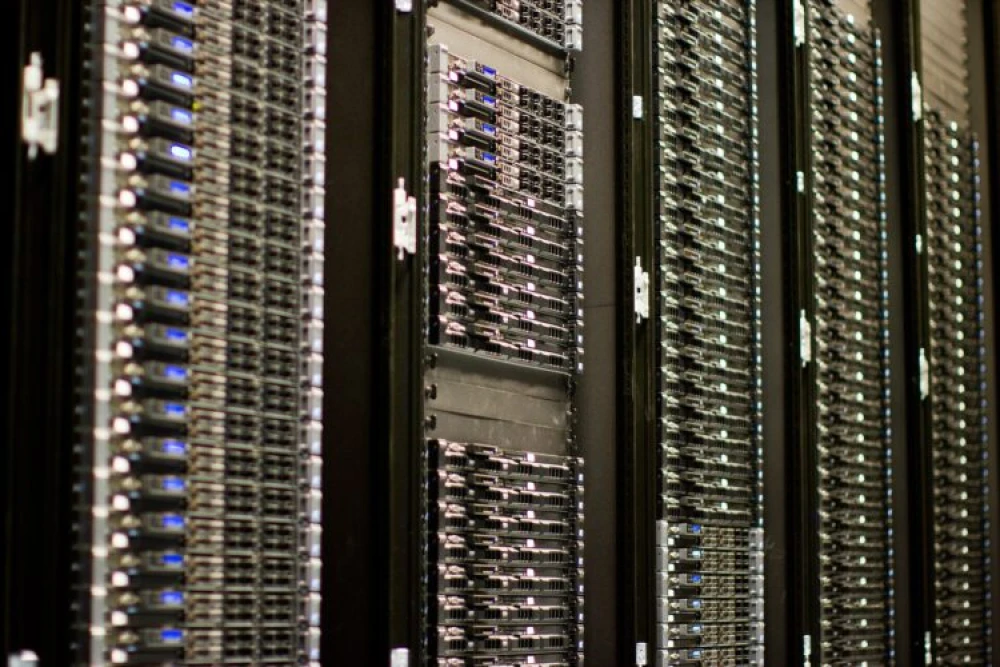
Featured image: Rows of server racks in a data centre. This photograph is illustrative and does not depict an IREN, TeraWulf, or BitFuFu facility. Photo: Victor Grigas / Wikimedia Foundation via Wikimedia Commons, licensed under CC BY-SA 3.0.
Authors credited by the source: NewsBTC Editorial Team
Published by Holder based on an external source.