US strikes Iran push Brent crude above $90 per barrel
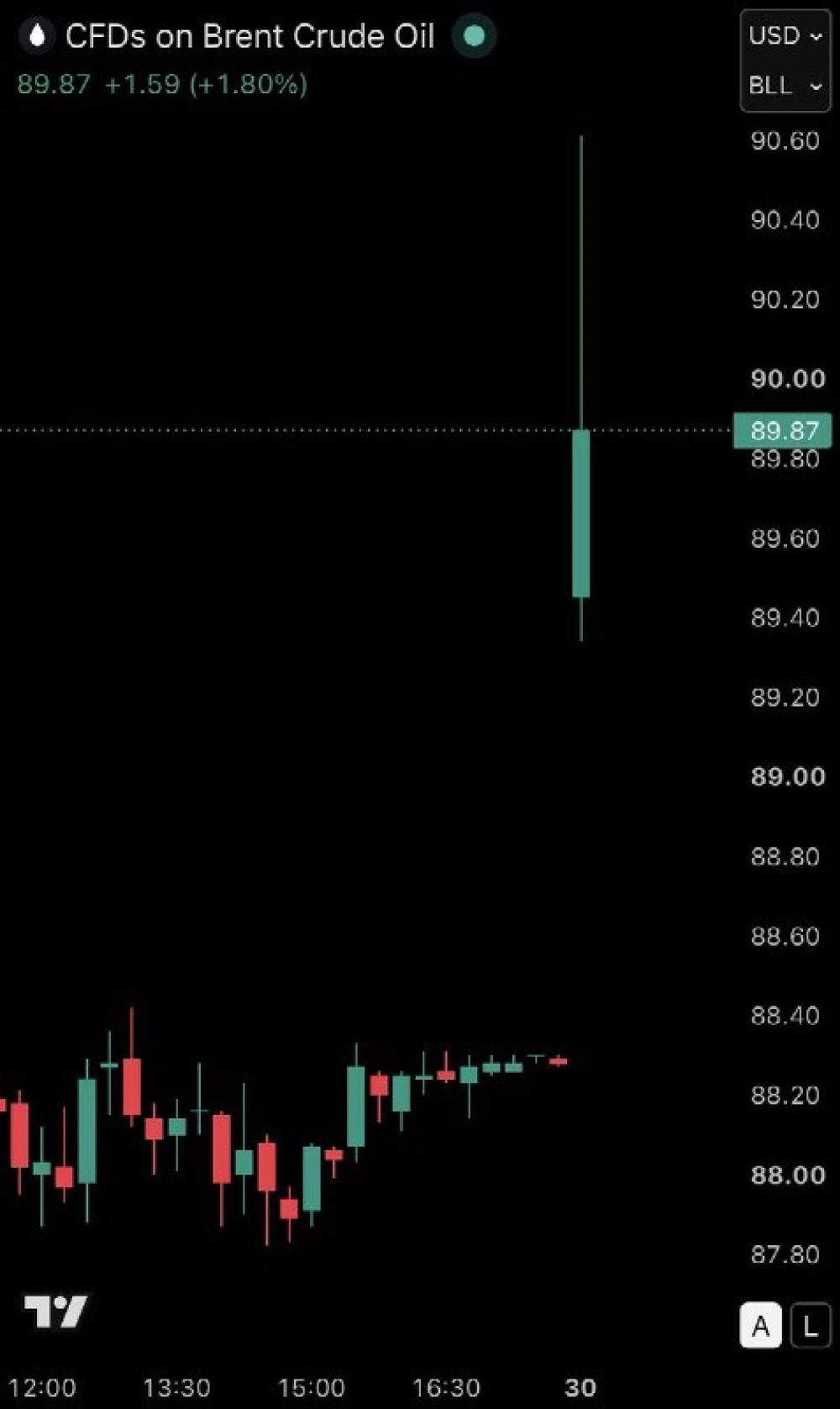
Brent crude oil rises above $90 per barrel after US strikes on Iranian targets. US officials state the strikes aim to prevent deployment of sea mines in the Strait of Hormuz, a key oil transit corridor linking Persian Gulf producers to global markets.
Key facts
- Brent crude: above $90 per barrel.
- US action: strikes intended to stop sea mine deployment in the Strait of Hormuz.
- Strategic chokepoint: the strait handles a large share of global seaborne oil flows, making disruption risk-sensitive for energy markets.
Market impact
- Energy prices: higher oil increases inflation pressure and raises the risk of tighter financial conditions.
- Risk assets: elevated geopolitical risk drives risk-off behavior across equities and crypto, increasing volatility.
- Safe havens and FX: demand for defensive assets can rise as investors reassess geopolitical and supply risks.
Crypto and DeFi implications
- Volatility: heightened price swings increase liquidation risk for leveraged positions and may widen funding rates on perpetuals.
- Mining economics: higher energy costs reduce margins for proof-of-work miners.
- Liquidity and flows: risk-off conditions can increase demand for USD-denominated stablecoins and reduce appetite for high-beta tokens.
What to monitor
- Strait of Hormuz transit: shipping volumes, insurance costs, and any additional security incidents.
- Policy signals: statements from US and Iranian authorities and any steps affecting oil production or exports.
- Energy market gauges: Brent–WTI spread, refinery margins, inventories, and implied volatility.
- Crypto stress indicators: perpetual funding rates, futures basis, on-chain stablecoin net flows, and spot–derivatives divergence.
Authors credited by the source: thekobeissiletter
Published by Holder based on an external source.