US Treasury sanctions 41 entities, 4 individuals tied to Prince Group
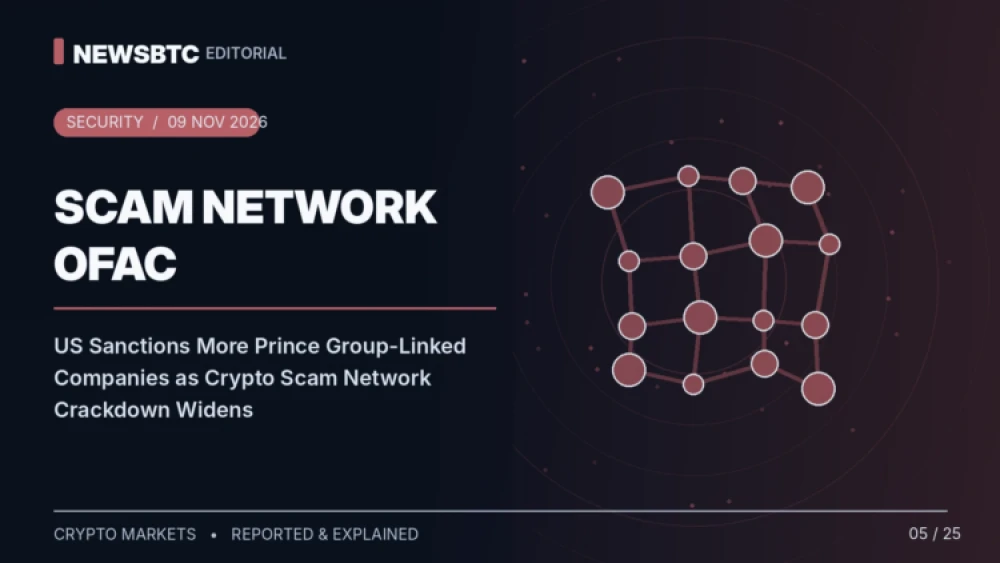
US authorities are targeting the corporate infrastructure behind online investment scams, not only wallets that receive stolen funds. On November 5, Treasury sanctioned four individuals and 41 entities it says supported the Prince Group transnational criminal organization, along with an individual accused of managing another scam network. The action connects alleged digital asset fraud to offshore companies, nominee ownership and payment facilitators, showing that a single suspicious transaction rarely reveals the full network.
The targets go beyond trading accounts
Treasury states the designated individuals and companies helped preserve Prince Group business networks after sanctions in 2025 and 2026. Some managed offshore entities, hid beneficial ownership or provided services to previously designated executives. The agency also named a Malaysian individual who allegedly ran a network of scammers based in Madagascar. These are allegations in a sanctions notice and are not determinations that all customers or employees of a named organization engaged in a scam.
How the alleged schemes work
Treasury describes digital asset investment fraud, romance scams and other deception that moved victim funds into accounts controlled by criminals. Some operations used compounds in Southeast Asia and people coerced or trafficked to conduct fraud. Funds often start in banks or payment apps and later reach exchanges and wallets. The chain involves property companies, corporate agents and conventional intermediaries. Isolating one wallet risks missing the structures that enable a network to reconstitute itself.
Why ownership records matter
Sanctions restrict dealings with named entities, but investigators need to identify controllers behind layers of holding companies. Treasury alleges associates transferred property, managed businesses and obscured beneficiaries after earlier designations. Exchanges and crypto businesses should pair blockchain analytics with beneficial ownership checks. A firm may have no direct transfer with a known illicit wallet yet still face a counterparty risk if a customer or supplier is controlled by a sanctioned person.
The role of international cooperation
Treasury credits law enforcement and overseas authorities, including partners in the British Virgin Islands and the UK. Cooperation links financial accounts, registrations and corporate directors with onchain evidence. Public blockchain transparency shows addresses but not who arranged structures or authorized accounts. Effective disruption requires digital tracing plus traditional records. Designations may affect uninvolved customers of related services, which makes accurate identification critical.
What users can learn from the case
Victims of online investment fraud should preserve transaction identifiers, messages and platform details and report them to official authorities, rather than paying third parties that claim guaranteed recovery. Businesses should check whether listed counterparties, aliases or beneficial owners appear in current relationships. The broader point: crypto-enabled scams operate as organized financial crime with real-world corporate infrastructure, and enforcement is increasingly directed at that infrastructure.
Primary source: US Treasury / OFAC. Additional context: NewsBTC coverage of expanding crypto financial services.
Written by the News Desk and edited by Samuel Rae.
Authors credited by the source: NewsBTC Editorial Team
Published by Holder based on an external source.