68 0
Crypto Liquidity Cycle Extends, Faces Debt and Inflation Risks by 2026
Raoul Pal and Michael Howell discuss the current state of the global liquidity cycle and its impact on crypto and technology equities.
- The liquidity cycle is mature, about 34 months old, but expected to peak around 2026 due to policy interventions.
- Long-duration assets like crypto benefit from ongoing currency debasement, with a debt refinancing challenge looming.
- A shift from Fed QE to Treasury QE is noted, with short-dated bills increasing system liquidity.
- The Federal Reserve manages bank reserves to maintain market stability, avoiding rapid cash drainage that could spike repo spreads.
- Global liquidity remains strong, with Europe and Japan net-adding liquidity and China easing monetary policy through various tools.
- Japan's duration rotation indicates a preference for equities over bonds in a mild-inflation regime.
- The U.K. and France face term premium increases due to heavy issuance and weak growth, possibly leading to monetization strategies.
- The dollar's real trade-weighted strength persists, though a weaker dollar would aid in global debt refinancing.
- Pal and Howell suggest investing in technology and crypto as they operate within elongated trend channels.
- Stablecoins are crucial for public-sector credit creation, impacting traditional credit growth.
- Risks are anticipated in the 2026–2027 window when significant debt rolls over at higher rates, potentially affecting liquidity.
- In the near term (3-6 months), both see continued Fed liquidity support, maintaining the existing trend.
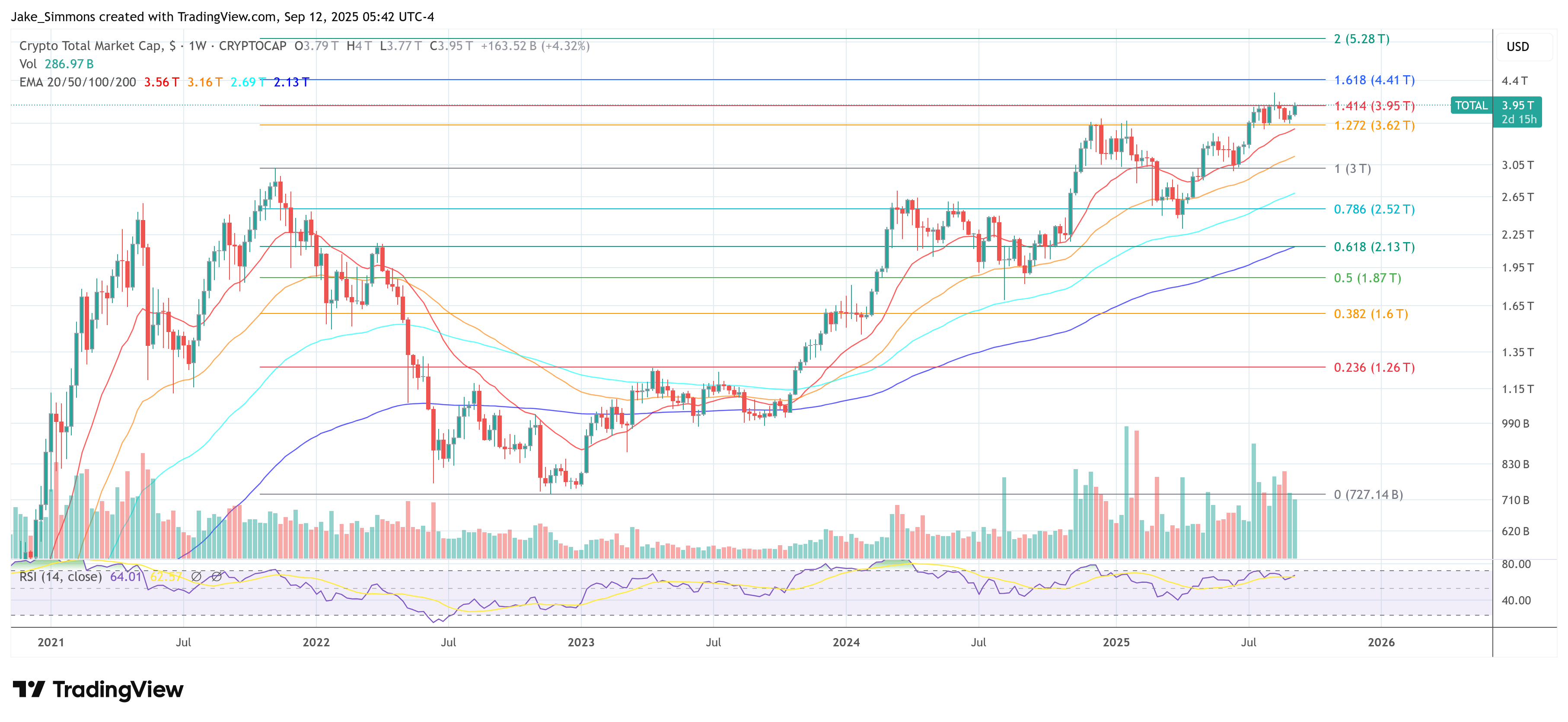
At the time of reporting, the total crypto market cap was $3.95 trillion.