17 0
Polymarket prices Democrats to win House, edge Senate in 2026 midterms
Polymarket traders price Democrats as strong favorites to win the House and modest favorites to take the Senate in the November 3, 2026 midterms. As of Tuesday, October 20: Democrats 91.5% to win the House, 64.5% to win the Senate. The balance-of-power market shows 62.5% for a Democratic sweep, 27.5% for a Democratic House with a Republican Senate, and 8.5% for a Republican sweep. The Senate remains the key variable for policy, including crypto.
JUST IN: Trump declares the midterm polls “are rigged.”
— Polymarket (@Polymarket) October 19, 2026
How Are the Midterm Polymarket Odds Moving?
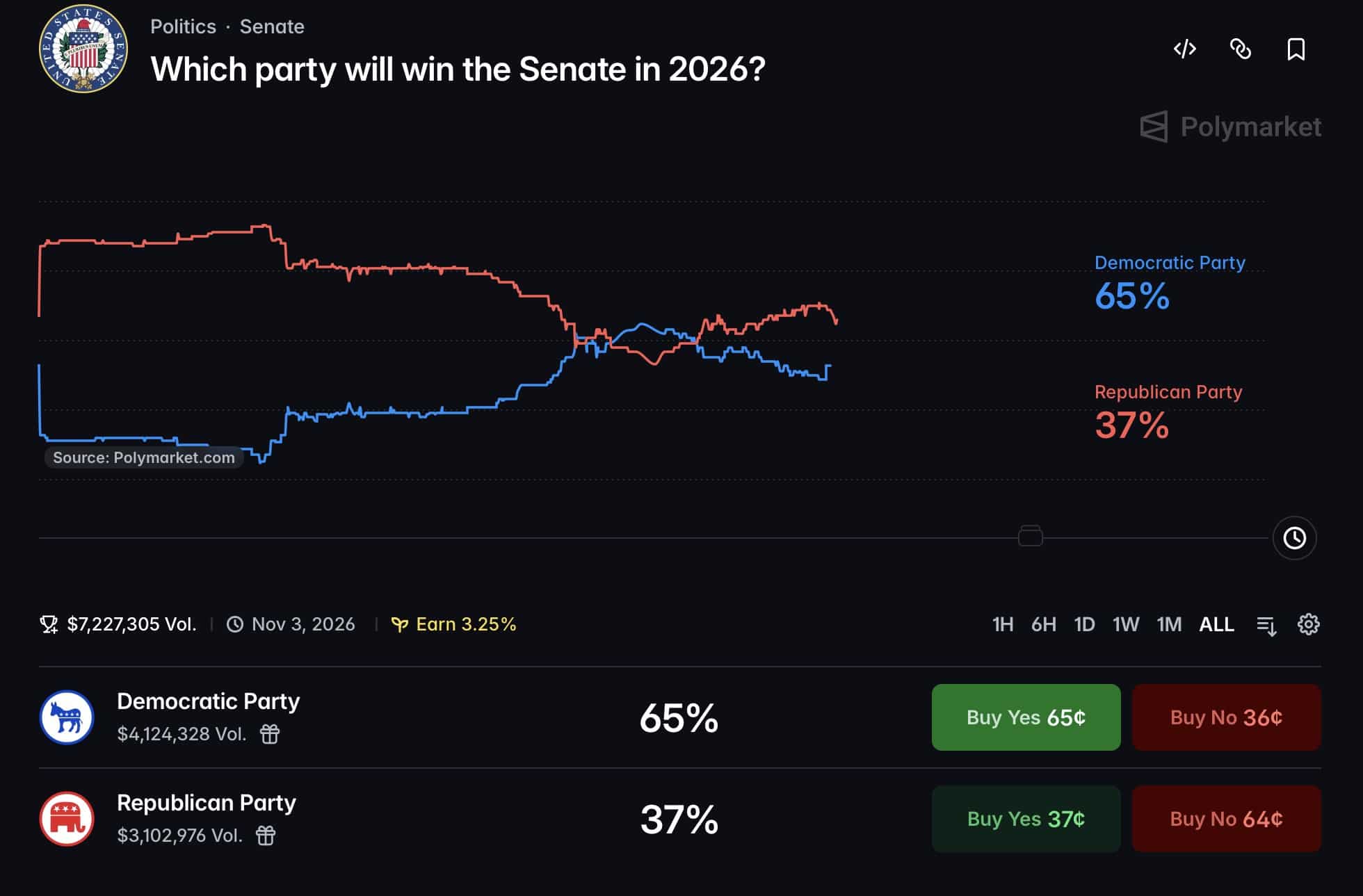
- Trend: Democratic odds for the Senate rose from 60.5% on September 21 to 64.5%. House odds eased from 92.5% to 91.5%. Split outcome (Democratic House, Republican Senate) fell from 30.5% to 27.5%.
- Payout math: A 64.5-cent price implies a 64.5% probability. Multipliers mirror this: a 1.09x display for the Democratic House corresponds to 91.5% implied odds.
- Liquidity: Traded volume — House: $18.78 million, Senate: $7.23 million, balance-of-power: $25.54 million. The thinner Senate market moves on less capital.
What Would a Democratic House Mean for Crypto Regulation?
- Committee control: The House Financial Services Committee gavel would shift to Democrats. Maxine Waters, currently the top Democrat and former chair from 2019 to 2023, would likely lead, prioritizing tighter oversight and controlling the hearing calendar. Rep. Sean Casten is challenging Waters for the top Democratic spot. Party leadership has not intervened.
- CLARITY Act status: The crypto market-structure bill passed the House 294–134 in July 2025. It failed a Senate procedural vote 49–50 on September 15. Sen. Thom Tillis filed a motion to reconsider, keeping it eligible for a lame-duck vote. If not passed before the session ends, the bill expires in January and would be reintroduced in a new Congress, likely starting in a Democratic-led House.
Implications for Crypto
- If Senate odds converge toward House levels: markets price a Democratic sweep, increasing probability of more centralized oversight and faster committee action on digital asset regulation timelines.
- If Senate odds slip below 60%: markets price divided government, implying bipartisan negotiation for any crypto framework and slower legislative throughput.
- Market caveat: Prediction markets are price-based signals and can swing on large orders, especially in thinner contracts like the Senate.
Authors credited by the source: Daniel Francis
Published by Holder based on an external source.