
Shariah-compliant PUSD goes live on ADI Chain for Gulf institutions
PUSD launches on ADI Chain. A Shariah-structured, dollar-linked stablecoin now runs on the UAE‑licensed network.
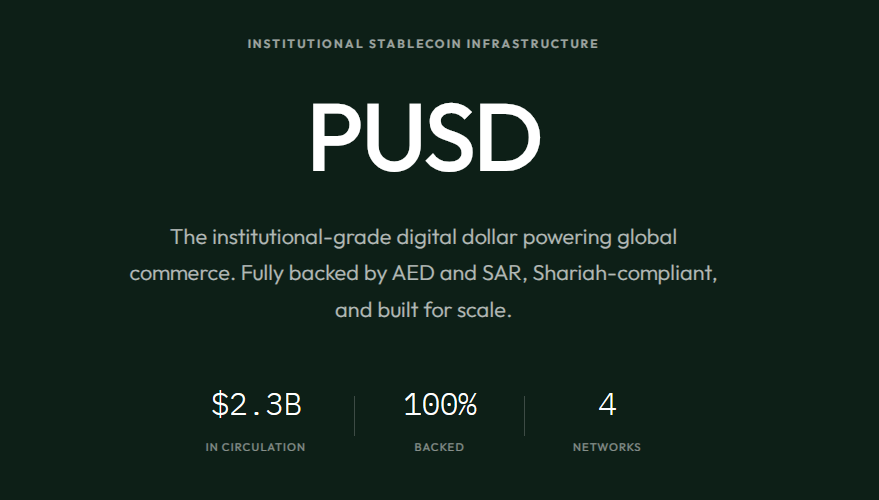
Palm Azgar’s PUSD holds reserves in Saudi riyals and UAE dirhams, both pegged to the dollar. The issuer discloses reserves on its transparency page (PUSD reserve disclosures). Its Shariah-focused design relies on asset backing and no interest (MEXC: PUSD structure).
Supply stands near $2.3 billion, per the issuer. PUSD already runs on Ethereum, BNB Chain, Solana, and Tron. ADI Chain is the newest network.
ADI Chain was built as a settlement layer for a dirham-backed token from IHC and First Abu Dhabi Bank. The Central Bank of the UAE licensed the network (ADI Foundation: network background).
With PUSD on board, institutions can settle in a dollar-linked token or a dirham token on the same rails (ADI Foundation: settlement platform). The network targets payment corridors across the Gulf, the Middle East, and parts of Africa.
Islamic finance assets exceed $3 trillion globally, per the ADI Foundation (ADI Foundation: market overview). Shariah forbids interest, limits speculation, and requires real-asset backing (CFR: Shariah overview; Library of Congress: Shariah finance primer). Certification by qualified scholars is usually required; the report does not confirm PUSD’s certification status.
The UAE has rolled out stablecoin frameworks via the Central Bank and Abu Dhabi Global Market (S&P Global Ratings: UAE stablecoin rules). ADGM has recognized major issuers. USDT was recognized as an accepted fiat‑referenced token in ADGM (Tether: ADGM recognition). Ripple USD received similar treatment (Ripple: RLUSD recognized in ADGM).
PUSD now competes with established names for institutional settlement flow on a regulated regional hub.