
Bitcoin jumps above $82,000 as ETF inflows return and yields fall
Bitcoin rose more than 5% on September 3 to briefly trade above $82,000 as expectations of a Federal Reserve rate hold increased and Treasury yields declined. Fundstrat’s Sean Farrell highlighted the move as a notable data point and observed that Bitcoin has defied its historically weak September pattern in each of the past three years.
September Setup: Rally against a weak seasonal base rate
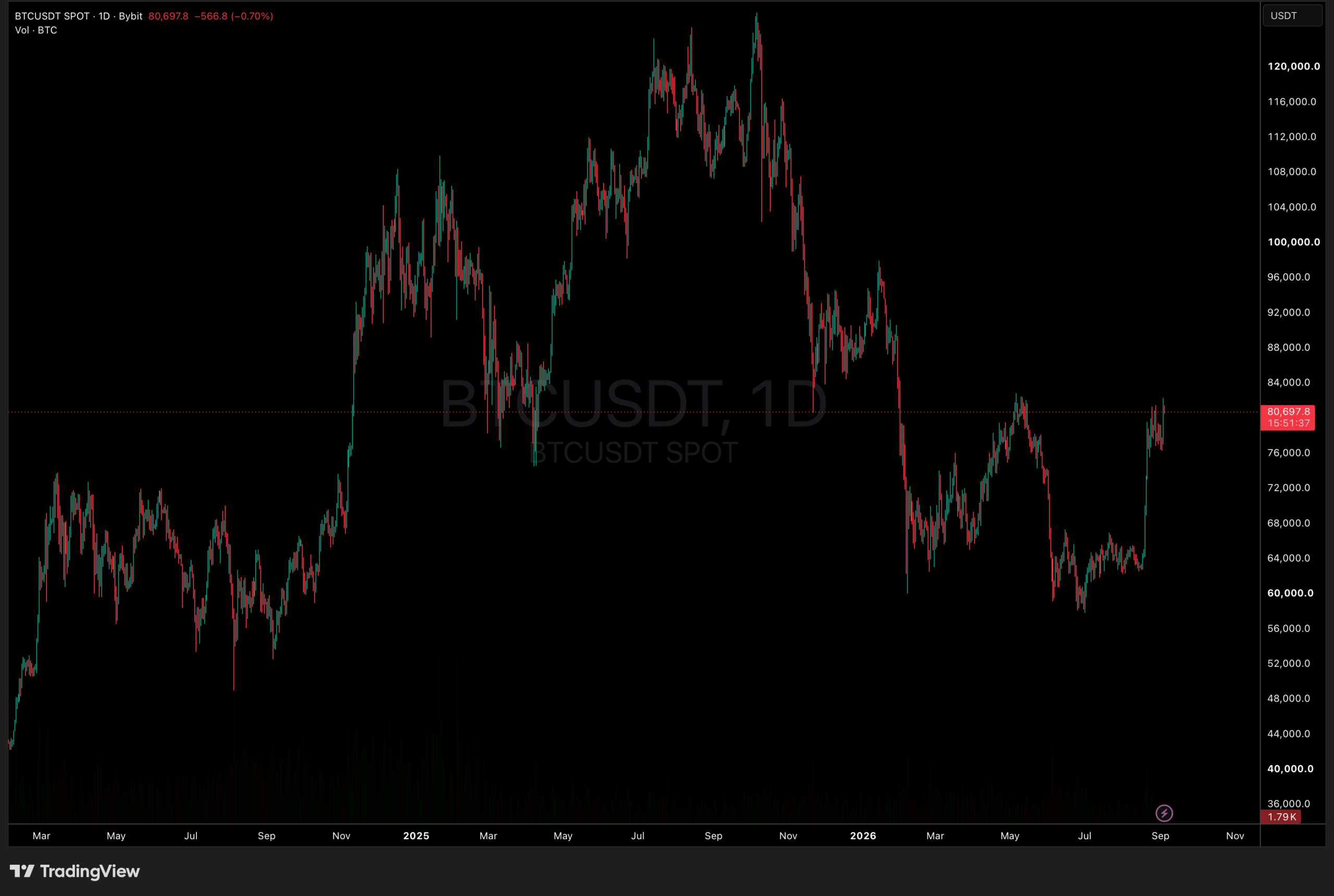
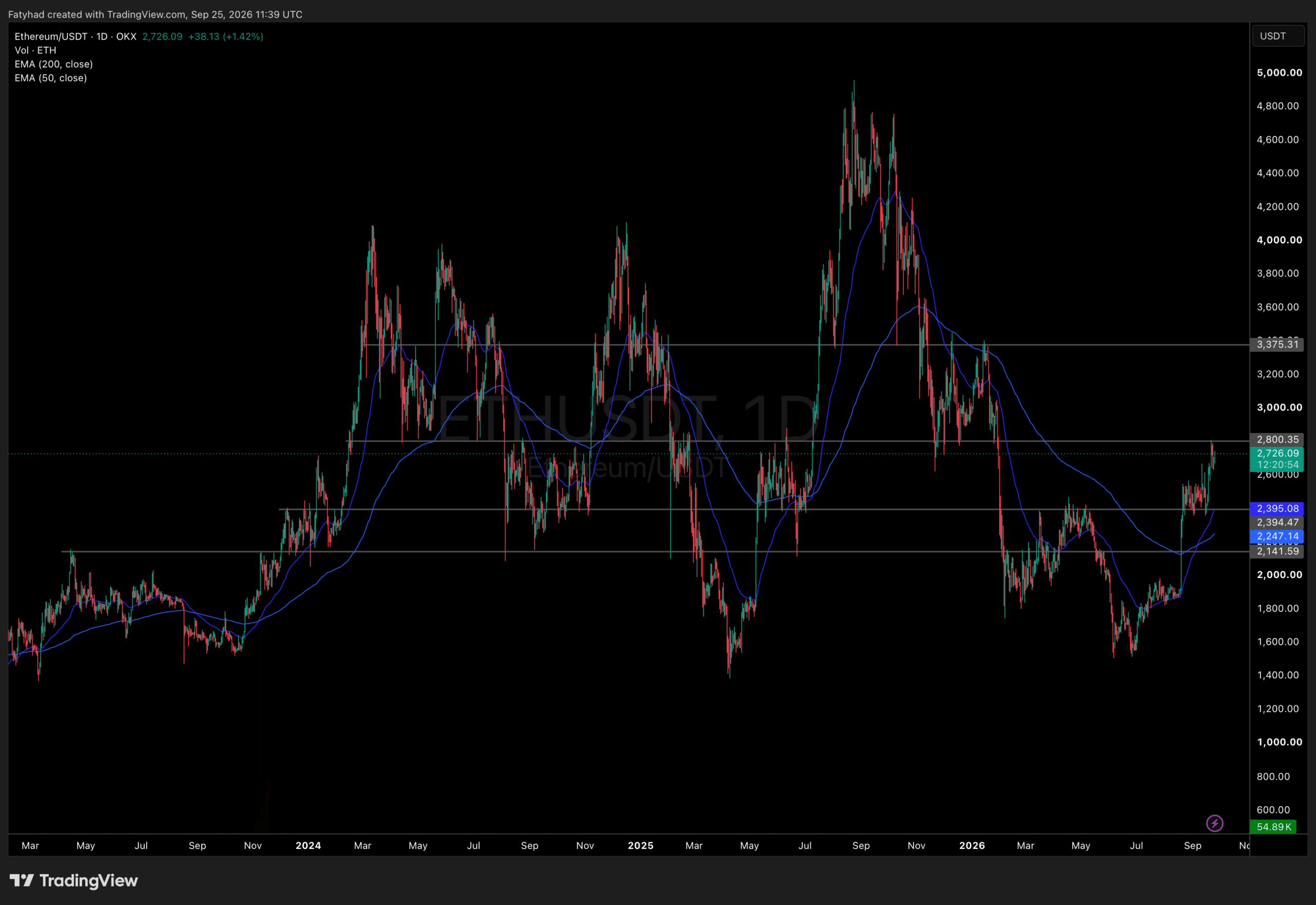
Bitcoin Price 1D : Tradingview
The move followed a 25% gain in August, which strategists linked to Treasury interventions in the bond market and support for Japan that lifted gold and crypto. Subsequent oil strength and hawkish remarks from Fed Chair Kevin Warsh pressured risk assets before Fed Governor Christopher Waller signaled willingness to hold rates if inflation keeps easing. Bitcoin remains about 7% lower year to date and roughly 35% below its early-October 2025 all-time high above $126,000. Seasonality remains a headwind: negative returns in nine of the past 15 Septembers. See context on yield dynamics in Bitcoin’s macro pressure and resilience and ETF positioning in BlackRock’s IBIT and the current price setup.
ETF flows: rebound signal, not yet a trend change
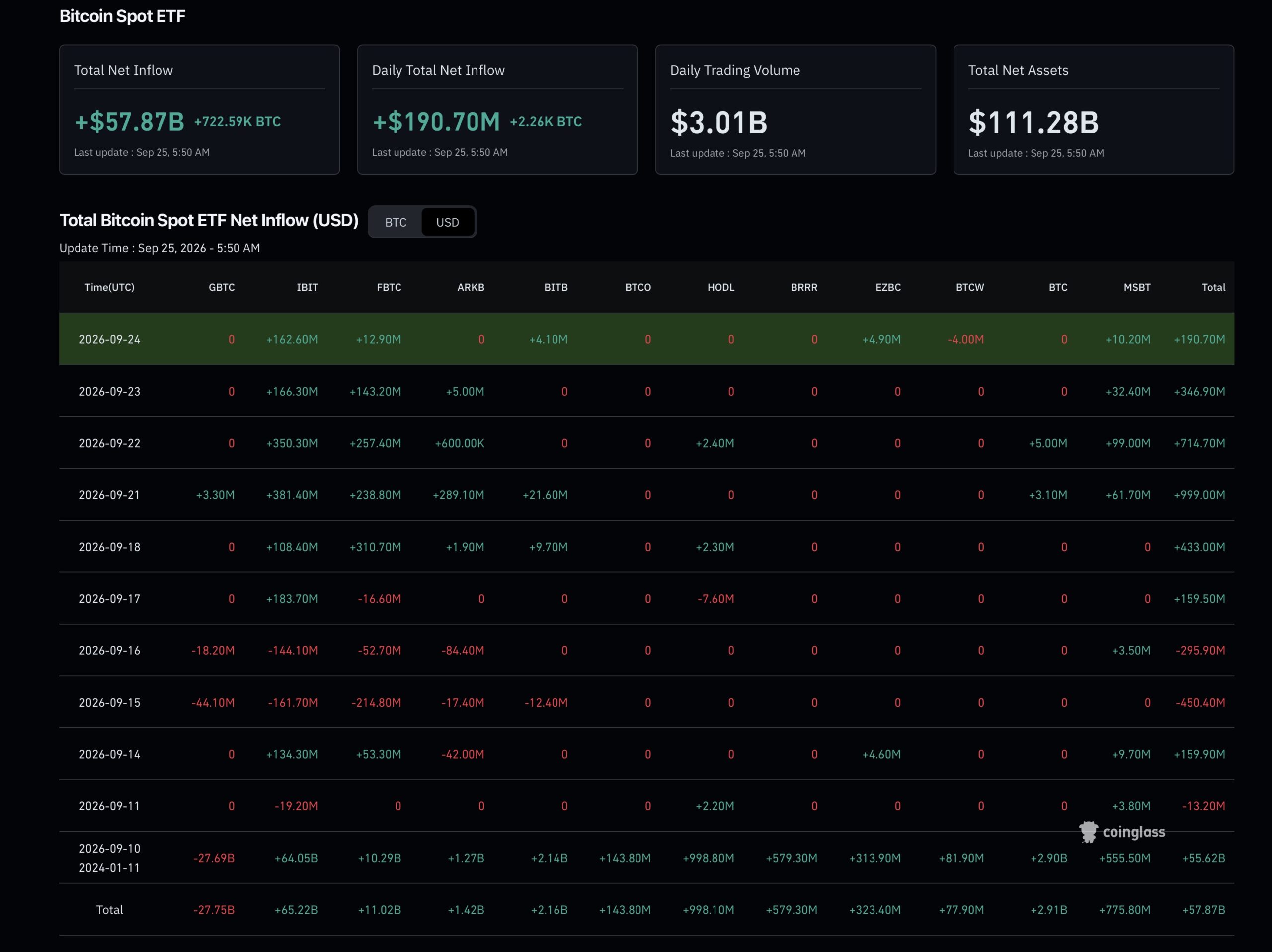
US spot Bitcoin ETFs saw a $252.8 million aggregate net inflow on September 3. ARKB led with $137.7 million, and BlackRock’s IBIT added $115.4 million. Month-to-date flows reached $87.0 million, while year-to-date remained negative at $2.52 billion, based on Farside. The reversal followed a $236.5 million aggregate outflow on September 1, including a $201.2 million IBIT outflow. Sats Intelligence notes daily figures can be provisional until all issuers report, which frames the inflow as an early indicator rather than confirmation of sustained demand. Trackers: Sats Intelligence ETF flows and historical context via gold ETF parallels.
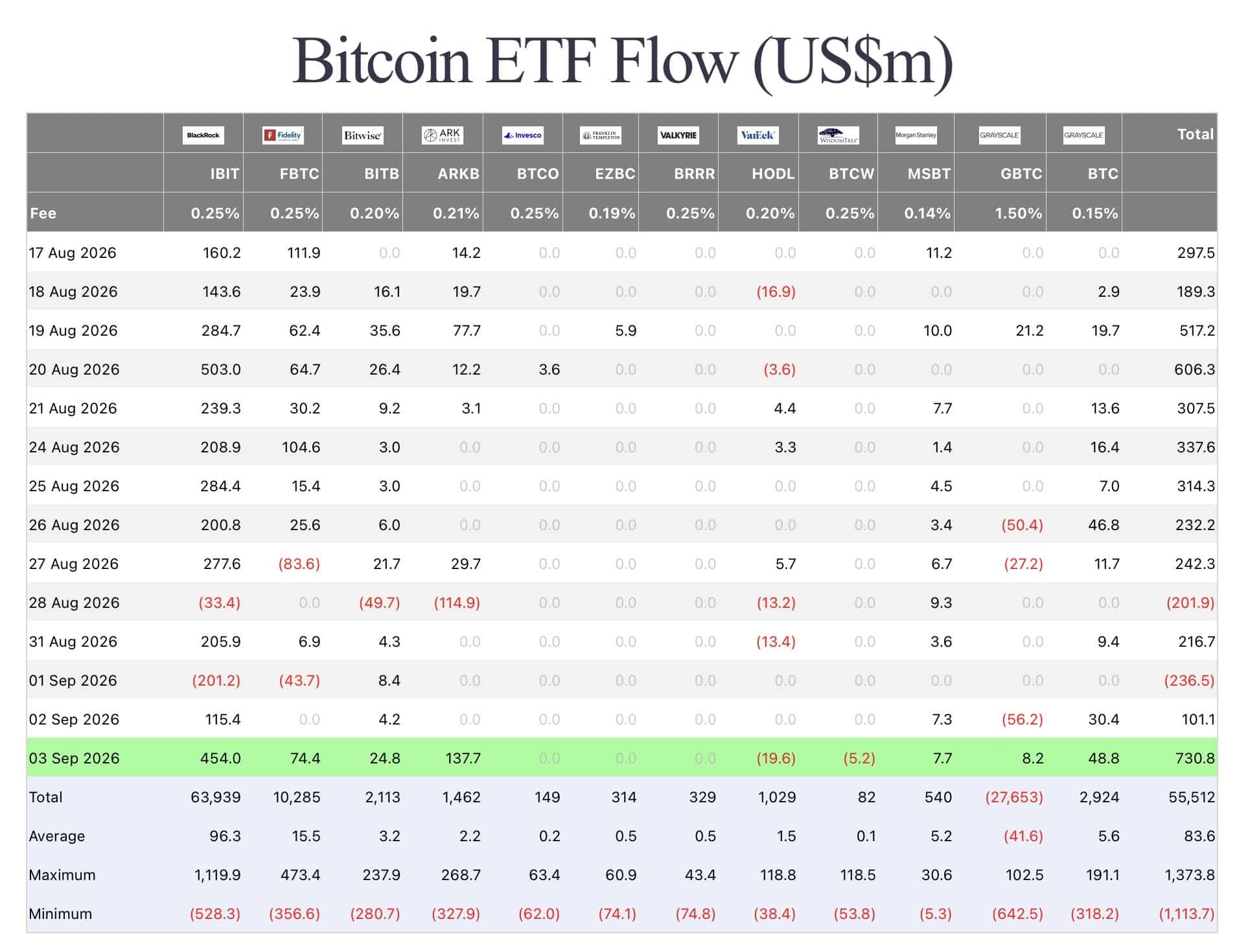
Bitcoin ETF Flow (US$m) Farside
Path to Q4: rate decision as the catalyst
Finality Capital’s David Grider expects a potential rally into late September or early October if the Fed holds rates or if yields fall after an initial hike. Bernstein’s Gautam Chhugani keeps a $150,000 year-end target, citing Treasury yield-curve support that sustains demand for hard assets. Q4 has skewed positive for Bitcoin historically, with exceptions in 2018 and the prior year.
Key risks: September’s negative base rate remains a counterweight, and ETF flows have flipped from a $236.5 million outflow on September 1 to a $252.8 million inflow on September 3, showing fast-moving institutional positioning. No specific downside trigger or target was identified in the reporting.