Optimizely hack infects 178 sites, targets crypto wallets, Bitcoin stays flat
An attack on Optimizely’s web experimentation platform on November 16 injected crypto-stealing code into 178 organizations’ sites, including Ledger, HSBC, Zoom, the BBC, and CNN. The malware operated for about 19 hours before removal: it swapped crypto wallet addresses, skimmed card data, attempted iOS exploits on outdated devices, and exfiltrated screenshots and some cookies. Market impact: negligible.
BREAKING: A cyberattack hit 178 major organizations, including Zoom, CNN, BBC, Fox News, HSBC, Ledger, Equifax, Salesforce, IKEA and Air France-KLM, by loading malware on the Optimizely Web platform, exposing visitors to scripts built to steal payment data and exploit iOS…
— The Hormuz Letter (@HormuzLetter) November 17, 2026
Optimizely attack: method and timeline
Security researcher Scott Helme at Report URI documented the incident and published a breakdown. The attacker embedded code inside Optimizely project settings, causing Optimizely’s own CDN to deliver malicious scripts that appeared legitimate.
- 04:21 UTC: first infected script observed on BBC.
- 13:43: card skimmer added.
- 19:24–19:59: Report URI recorded 188 infected scripts across 178 organizations out of 1,611 checked.
- 20:41: Ledger’s script cleaned; all infected files cleaned by 23:11.
Malware functions:
- Wallet address swapping: replaced BTC, ETH, SOL, TRX, TON, LTC, and DOGE addresses found on pages, in forms, or clipboard with attacker-controlled addresses.
- Card skimming: captured card numbers entered into native site fields; hosted payment iframes such as Stripe were not skimmable.
- Cookie and screenshot exfiltration: transmitted screenshots and some browser cookies.
- iOS exploitation attempts: loaded an exploit kit on outdated iPhones and iPads; Report URI indicates iOS 18.7.3 and 26.3 or later include patches.
Optimizely stated it secured affected user accounts and added protections against further unauthorized code delivery. Report URI found no evidence of a Ledger hardware wallet breach. Risk centered on website interactions, where copied deposit addresses could be altered before pasting.
Funds stolen and market response
Report URI listed the attacker’s wallets. The Bitcoin address on mempool.space showed:
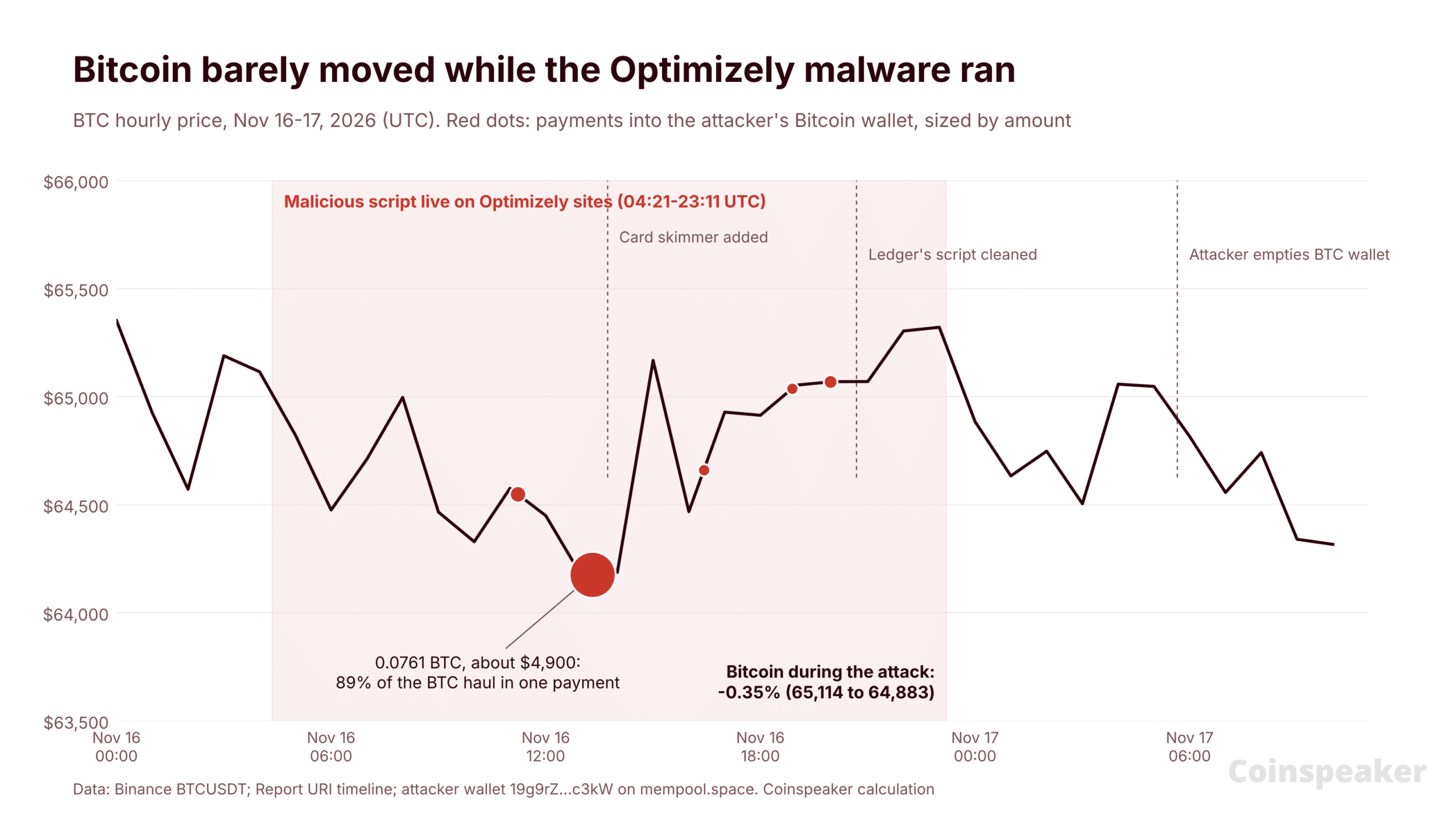
- Proceeds: five BTC payments totaling 0.0853 BTC, about $5,500. One transfer of 0.0761 BTC, about $4,900, accounted for 89%.
- Withdrawal: Bitcoin wallet emptied at 05:39 UTC on November 17.
- BTC price: slipped 0.35% from $65,114 at first infection to $64,883 by final cleanup. The 24-hour range of $63,905–$65,696 aligned with broader volatility. Current level near $64,300, with prior weekend low at $62,006 attributed to wider selling.
<liAll chains: approximately $7,150 across Bitcoin, Litecoin, TRON, Ethereum, and BNB Chain per Report URI.
The broader impact: frontend and infra attacks dominate 2026 losses
While this incident netted a small sum, website and infrastructure compromises have driven 2026’s largest crypto hack losses, based on DefiLlama classifications:
- 2026 to date: 20 frontend and infrastructure attacks causing $6.51 billion, equal to 74% of $8.8 billion total losses.
- 2025: nine such attacks totaling $110.6 million.
- Excluding Binance $6.36 billion: 19 attacks totaling about $155 million, 40% above all of 2025.
- Acceleration: 11 of the 20 occurred in October and November.
Mitigations reside largely on the user side: verify destination addresses on the hardware wallet screen before signing, send test transfers, and keep mobile OS updated.
BTC price analysis around the event
Daily chart shows BTC at $64,326, below the 50-day EMA at $76,208 and the 200-day EMA at $75,864.
- Resistance: $65,500, repeatedly pivoted this year; next level $67,300, which capped rallies in June and July.
- Support: $62,300, defended in February, June, August, and this week; below that $57,800, the 2026 low set in July.
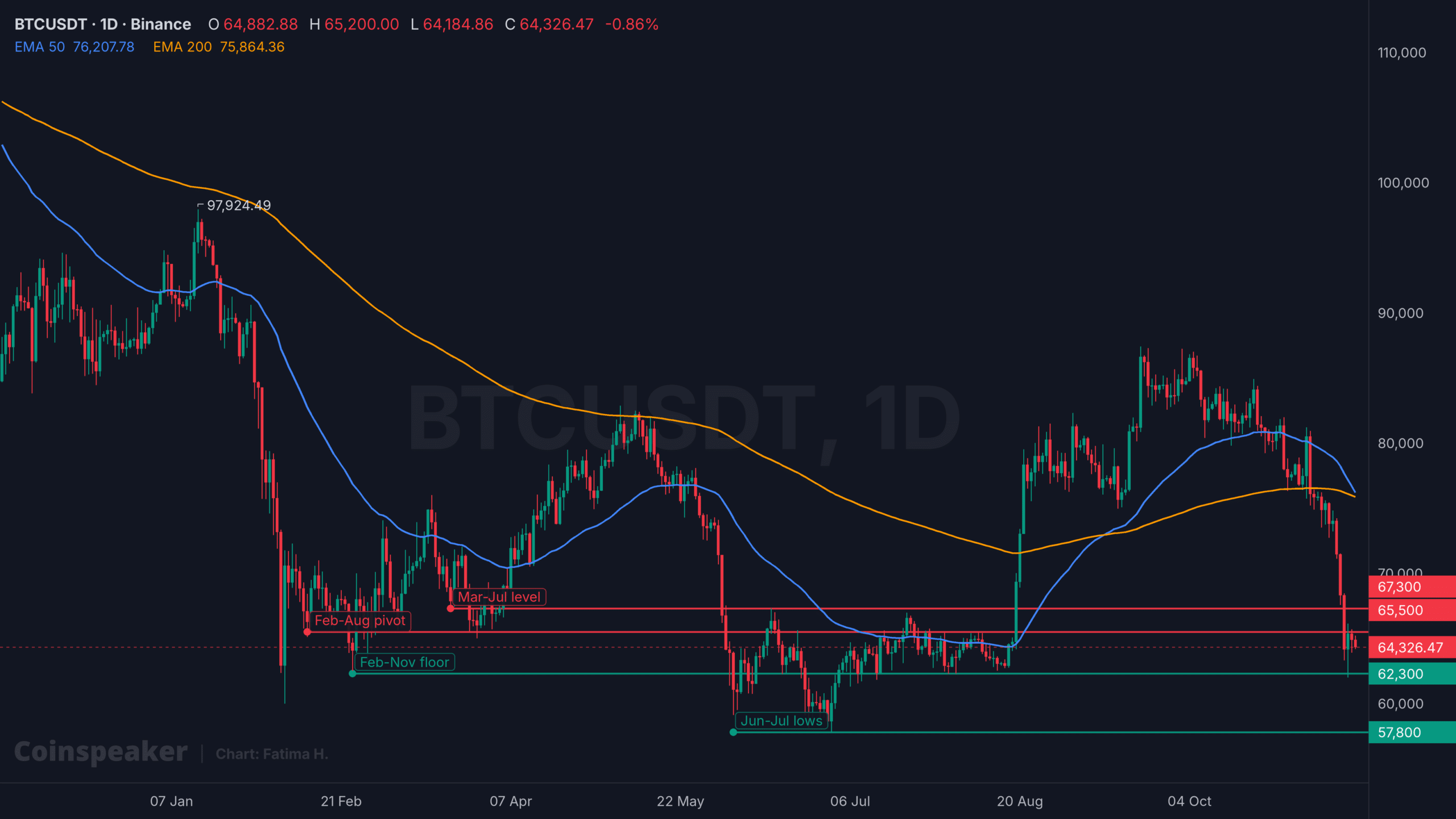
BTCUSDT 1D chart. Source: TradingView
| Outlook | Trigger | Level to watch |
|---|---|---|
| Rebound | A daily close above $65,500 | $67,300 |
| Holding pattern | Daily closes between $62,300 and $65,500 | A base above this year’s floor |
| Sell-off | A daily close below $62,300 | $57,800, the 2026 low |
Conclusion: the Optimizely compromise showed high exposure with low direct proceeds, no measurable effect on Bitcoin’s price, and underscored the need to validate addresses on-device and maintain updated systems.
Authors credited by the source: Daniel Francis
Published by Holder based on an external source.