Senate schedules Sept. 15 vote on revised CLARITY Act rules
A revised CLARITY Act draft posted on Senator Cynthia Lummis’ website would direct the SEC, CFTC, and Treasury to determine when people or coordinated groups controlling non-decentralized finance trading protocols must comply with securities, commodities, and anti-money-laundering rules. The proposal draws the regulatory line around identifiable human control instead of code or distributed ledgers. A protocol falls in scope if a person or group can materially alter functionality, operations, or rules, can restrict users, or if transactions are not governed solely by transparent, pre-established code. Software and distributed ledger systems themselves would not register in their own capacity per the bill’s current treatment of decentralized protocols.
This updated Clarity Act text reflects bipartisan hard work over August—specifying when decentralized-in-name-only DeFi protocols must register with the CFTC and limiting the DeFi provisions to spot and cash transactions, in response to Native American concerns about prediction…
— Senator Cynthia Lummis (@SenLummis) September 10, 2026
Senate process: 60-vote hurdle and open disputes
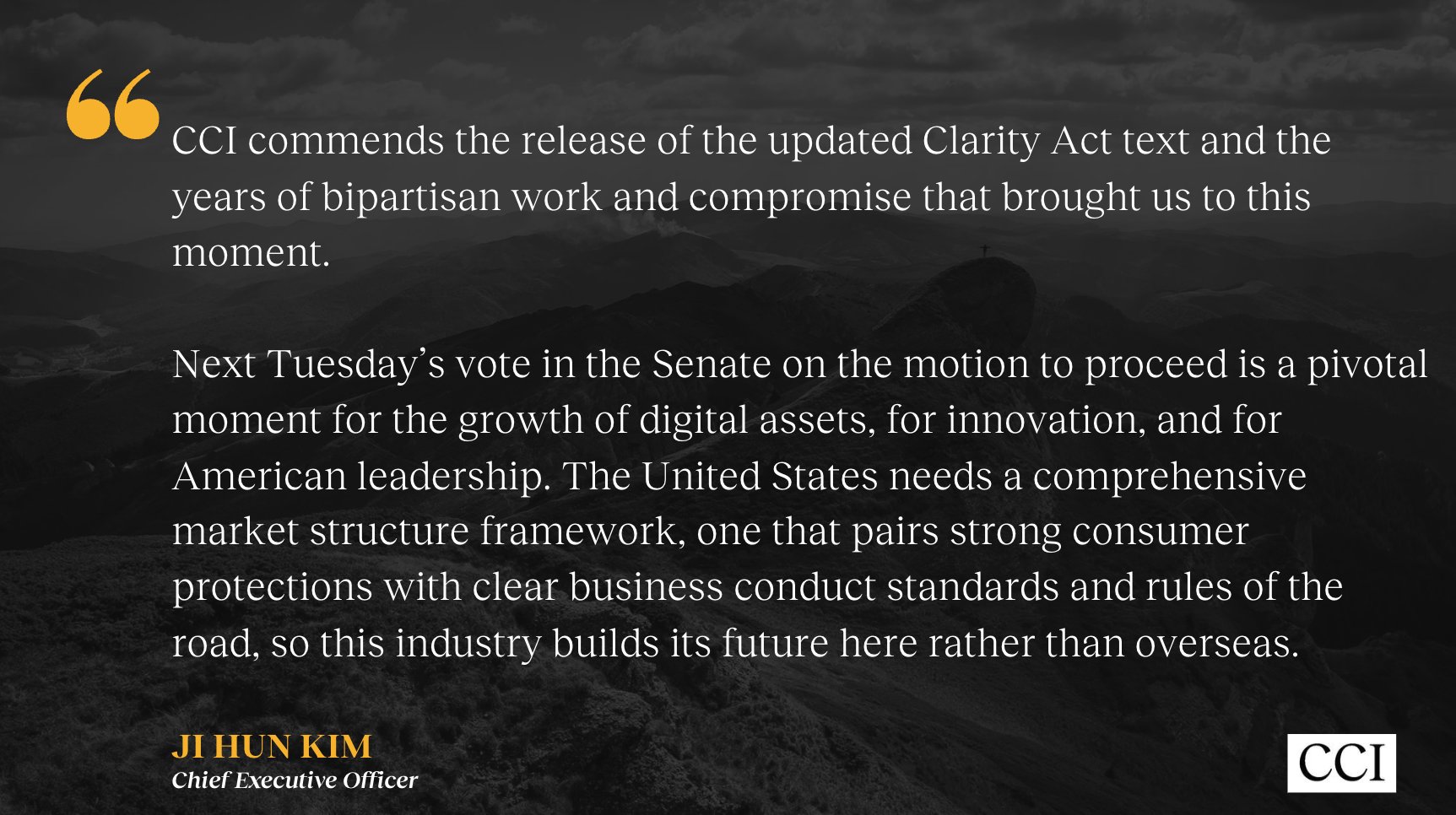
The Sept. 15 vote is a motion to proceed and requires 60 votes, so Republicans need Democratic support to advance. Disagreements persist over ethics provisions, anti-money-laundering protections, and stablecoin rewards. On Aug. 20, Senator Ruben Gallego warned against voting before resolving these disputes. Industry commentary: Crypto Council for Innovation CEO Ji Hun Kim called the vote pivotal for digital assets and American leadership, urging a framework pairing consumer protections with conduct standards. Coinbase CEO Brian Armstrong told CNBC the bill is ready for a yes vote from their perspective while ethics negotiations continue. The ethics section remains largely unchanged from the prior draft.
Source: Crypto Council for Innovation
Control test and agency roles
U.S. Congress Pexel
SEC and CFTC would craft activity-based rules for controllers of covered protocols: registration, conduct, disclosure, recordkeeping, supervision. Treasury would determine how Bank Secrecy Act obligations apply to the same controllers. Participation in an incident-response or security council would not, by itself, establish control. The bill’s framework suggests protocols with admin keys, upgradeable contracts, or concentrated governance may face a choice: decentralize further or accept compliance obligations for controllers. That inference is not stated in the bill and does not predict any specific protocol’s classification. If the bill fails the procedural vote, the SEC and CFTC could pursue rulemaking and innovation exemptions under existing authority, leaving the control-based question unresolved.
Authors credited by the source: Daniel Francis
Published by Holder based on an external source.