
U.S. Bitcoin ETFs add $3.8B over three weeks as IBIT, FBTC lead
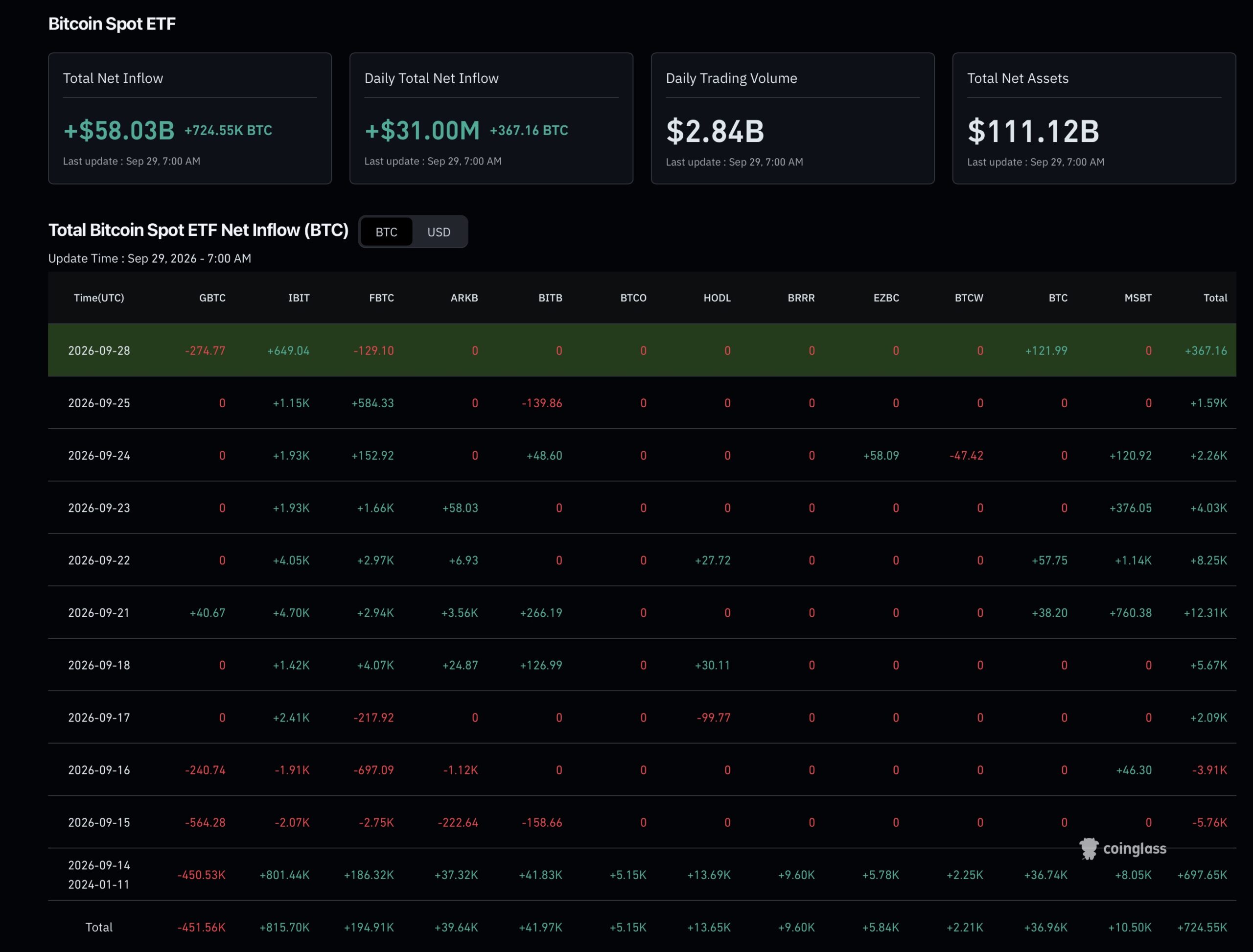
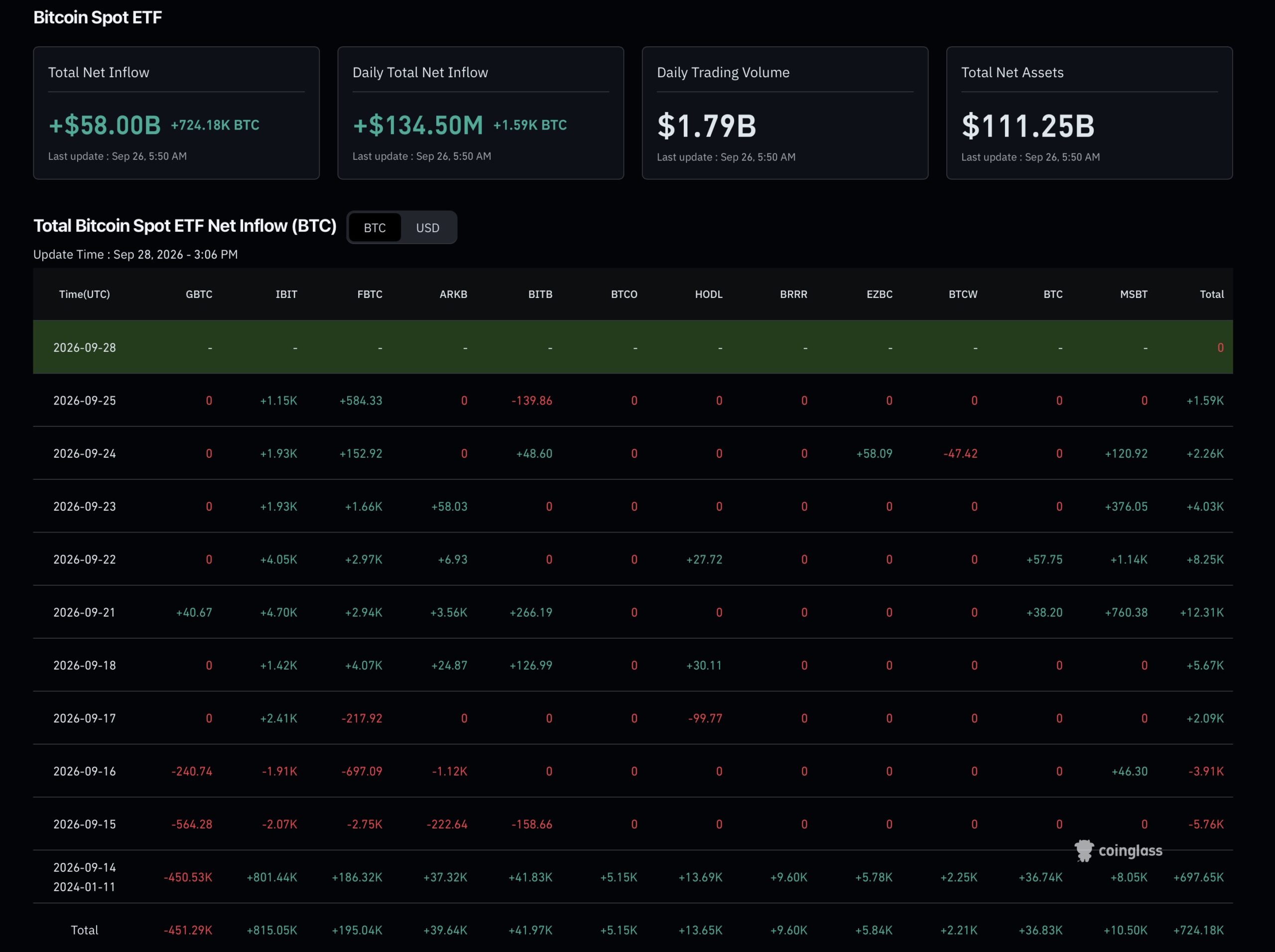
U.S. spot Bitcoin ETFs recorded $3.8 billion in net inflows over three weeks, led by BlackRock’s IBIT and Fidelity’s FBTC. Multi-week flow data indicates sustained regulated demand despite recent volatility and holiday-related liquidity distortions.
Key points
- $3.8 billion net inflows across U.S. spot Bitcoin ETFs over three weeks
- IBIT and FBTC led allocations
- Labor Day slowdown: liquidity effect, not evidence of institutional exit
Why three-week flows matter
Daily ETF flows are noisy: rebalancing, timing, basis trades, or single-fund moves can skew a print. A multi-week total shows a sustained pattern of demand across the ETF channel. The $3.8 billion net inflow signals ongoing appetite for regulated Bitcoin exposure during macro uncertainty and shifting liquidity.
IBIT and FBTC lead distribution
IBIT and FBTC attract flows through large distribution networks and established institutional channels. Leadership by these issuers indicates capital is moving through traditional finance pipelines into Bitcoin exposure, not only retail activity.
Inflows differ from AUM
Net inflows: new capital entering funds during the period. AUM: total asset value driven by both flows and Bitcoin price. The $3.8 billion figure reflects net capital added, not the total ETF market size.
Holiday effects on tape
A slowdown on September 4 preceded the U.S. Labor Day market closure: holidays reduce trading volume, delay allocations, and thin activity. A brief dip around closures should not outweigh a three-week inflow trend unless flows turn negative afterward.
What to watch
Post-holiday flows: continued additions to IBIT, FBTC, and peers would confirm a strong demand signal into September. A sharp weakening would challenge the durability of the three-week run.
Data sources: U.S. spot Bitcoin ETF flow data from Farside and SoSoValue. Definitions: spot Bitcoin ETFs, Bitcoin, ETF flows, liquidity.