
Coinbase CEO says crypto gets clarity regardless of CLARITY Act vote
Coinbase CEO Brian Armstrong said U.S. crypto will get regulatory clarity regardless of the Senate’s Sept. 15 CLARITY Act vote outcome. The bill requires 60 votes to advance. Ethics provisions remain under negotiation.
Two paths to clarity
Armstrong outlined two outcomes: if the bill passes, Congress provides a broader legislative framework that could unlock institutional capital and open a path for tokenized-equity products in the U.S. If it fails, the SEC and CFTC have indicated readiness to publish rulemaking shortly after, which would deliver near-term guidance. These are Armstrong’s characterizations, not confirmed agency commitments.
🇺🇸 The CLARITY Act vote is getting interesting.
Brian Armstrong basically says crypto gets clarity either way.
If it passes → Congress gives the industry a proper framework.
If it fails → the SEC and CFTC can still move forward with rules.
So Sept. 15 is all about how that… pic.twitter.com/akIXgKSmpZ
— nordin.eth (@nordin_eth) September 10, 2026
Bill status and Senate dynamics
The CLARITY Act divides digital-asset oversight between the SEC and CFTC. It was introduced in May 2025, passed the House in July 2025 with a 294-134 vote, and was reported to the Senate in June 2026. The Senate now faces a 60-vote cloture-style hurdle. Senator Ruben Gallego said reaching 60 votes requires resolving ethics provisions and other items.
🚨𝗝𝗨𝗦𝗧 𝗜𝗡: 🇺🇸 Democratic Senator Ruben Gallego spoke out against the ethics package in the Clarity Act. “That was not a serious effort.”
Gallego says they're “going to send back” a counterproposal before the bill reaches the Senate floor. pic.twitter.com/cACi7K2xmg
— DustyBC Crypto (@DustyBC) July 24, 2026
Armstrong said negotiators are close to agreement and that the bill has sufficient support among senators he has spoken with, pending resolution of ethics provisions.
If the vote stalls: agency rulemaking and Coinbase exposure
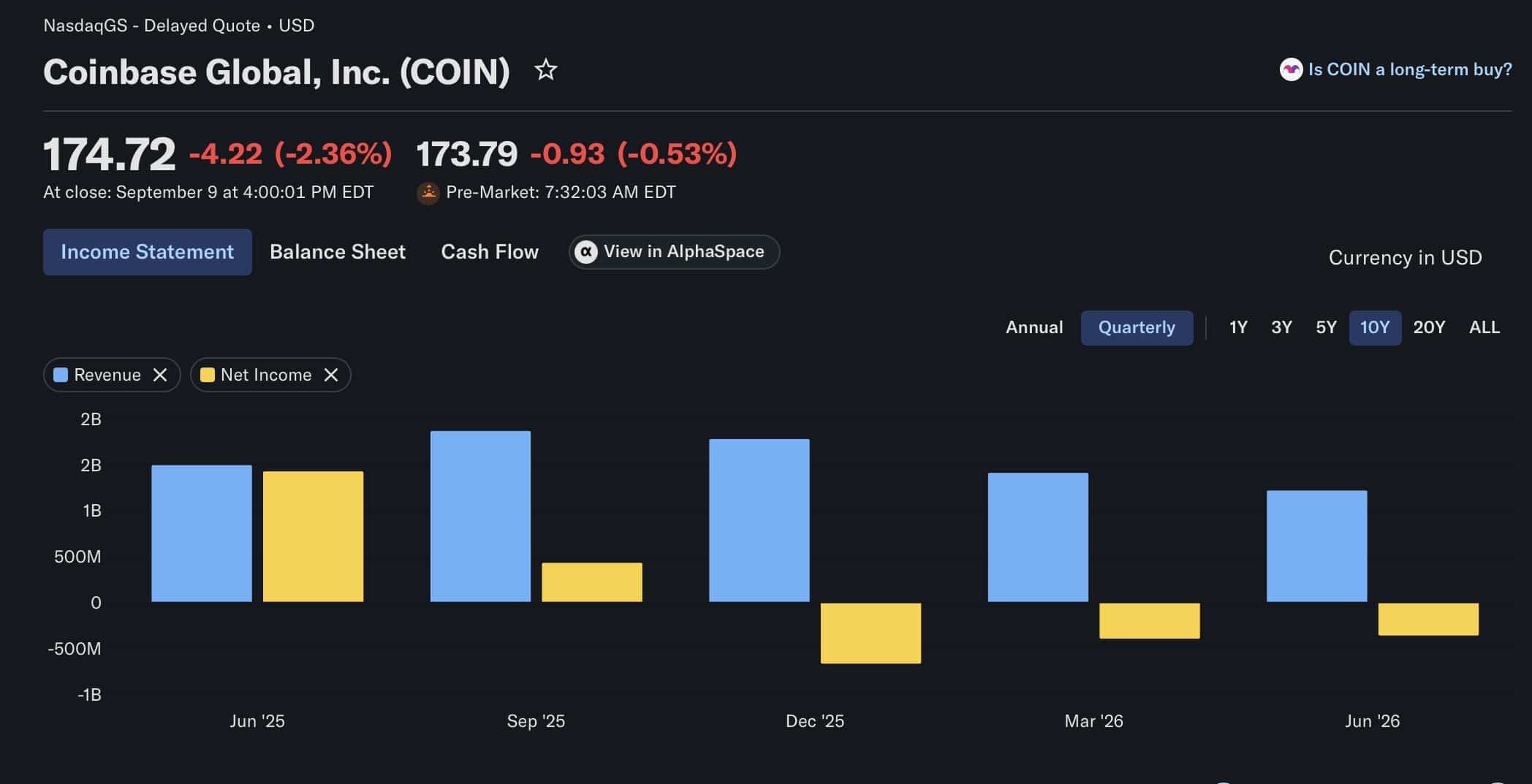
Coinbase Global, Inc. (COIN) Finance.Yahoo
Armstrong’s fallback relies on SEC and CFTC moving via rulemaking without Congress. Rulemaking can be faster but is less durable than statute. He still framed Senate passage as the larger milestone.
Regulatory outcomes have direct implications for Coinbase. About half of revenue comes from trading, which Armstrong said has declined over the past year. Q2 revenue fell to $1.2 billion from $1.5 billion a year earlier, and the company reported a $359.5 million net loss versus a $1.43 billion profit in the same period last year. Shares are down nearly 23% year to date.
Coinbase is diversifying into stocks, commodities, and FX trading, and scaling non-trading revenue from stablecoins and institutional custody. It is expanding hubs in the UAE and Singapore. Armstrong’s tokenized-equity thesis aligns with broader momentum in regulated tokenized products. Aviva’s tokenized fund issuance on the XRP Ledger illustrates this trend, though it does not confirm a U.S. outcome.
Key takeaway: Armstrong positions Sept. 15 as a clarity event either via legislation with long-term framework effects or through near-term SEC/CFTC rulemaking. Legislative passage would be more durable and could catalyze institutional adoption; agency rules would accelerate guidance but may face legal or administrative revisions.