

Aave V3 borrowing collapses to near-zero after Kelp DAO exploit
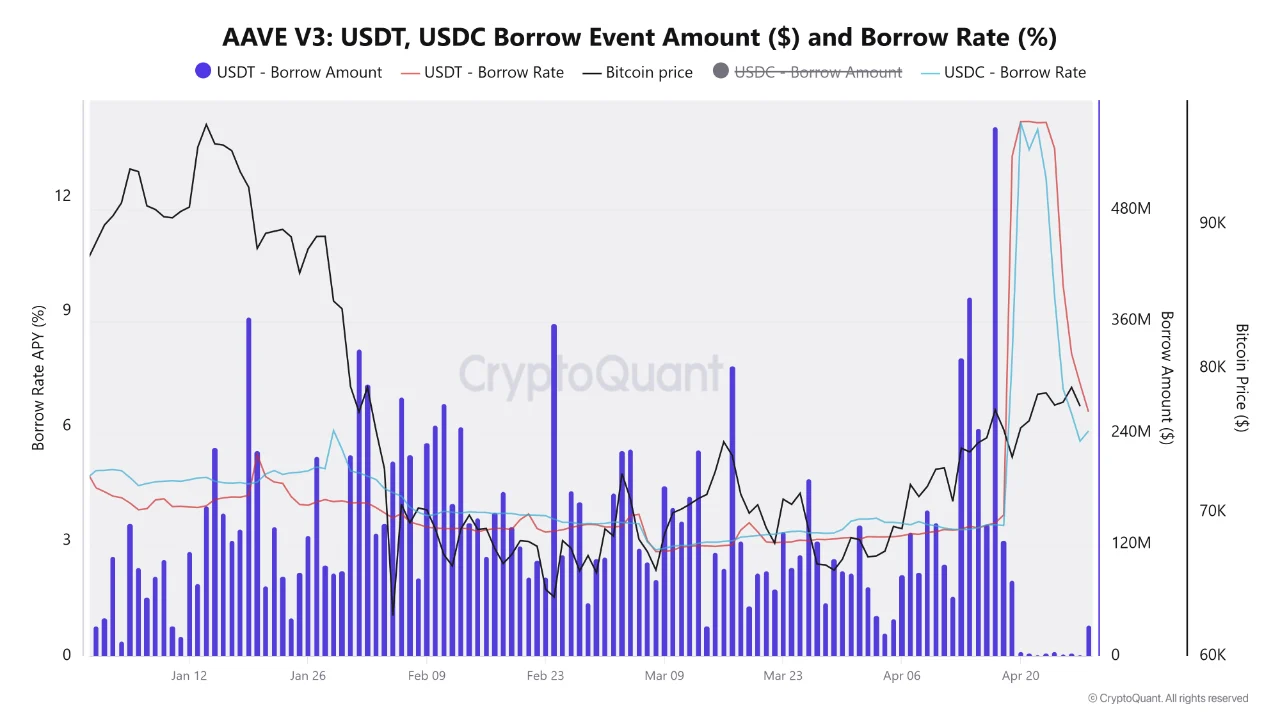
Aave V3 saw borrowing collapse to near-zero after attackers funneled $293 million in fraudulent collateral from Kelp DAO. Confidence broke. Deposits fled in billions. Rates spiked, then activity stopped.
Attackers exploited Kelp DAO and posted the stolen tokens as collateral on Aave V3. Aave’s contracts held. The assets didn’t. Bad debt formed. Liquidity tightened fast.
CryptoQuant tracked the shock. Borrowing rates on USDT, USDC, and WETH jumped, then borrowing events collapsed toward zero. Source: CryptoQuant report.
The spike was mechanical. Liquidity vanished, price of credit rose. The silence after was the story. Participants stepped back instead of re-entering as rates normalized. Cross-market contraction hit stablecoins and WETH together, signaling broad deleveraging and the unwind of layered DeFi strategies. Related context on borrowing flows: NewsBTC analysis.
CryptoQuant’s recovery marker is clear. Borrow events must return alongside normal rates. Until then, the protocol is structurally fine, but functionally light on active users.
Key impacts:
- Fraudulent collateral entered Aave V3; real assets were borrowed against it. Source
- Borrowing rates on USDT, USDC, WETH spiked, then activity fell near zero. Source
- Stablecoin and WETH weakness shows systemic deleveraging, not an isolated pool issue. Source
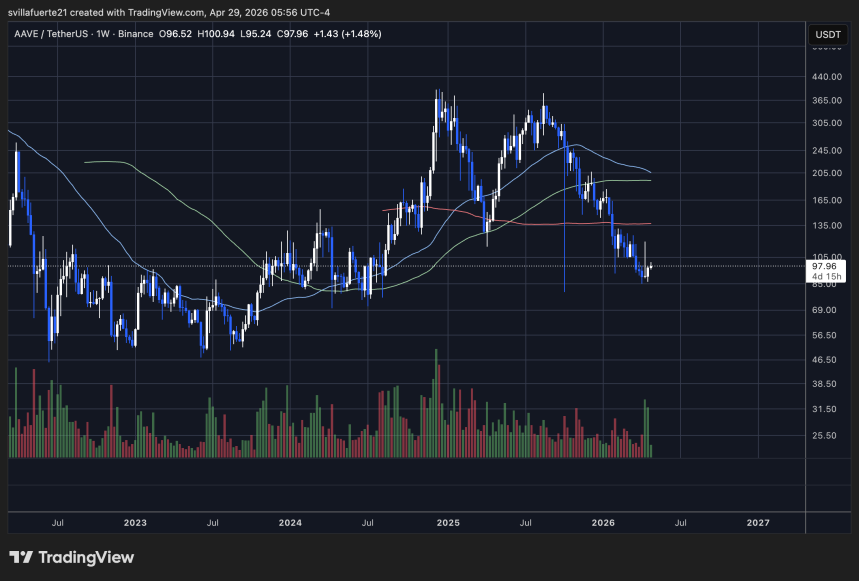
AAVE trades near $98 after a prolonged downtrend from $350–$380. Trend is bearish on higher timeframes. Lower highs and lower lows persist.
Support sits at $85–$95, a 2023–2024 demand zone. Holding it keeps the base attempt alive. Losing it risks deeper downside.
Major moving averages — 50w, 100w, 200w — slope down above price. Resistance stacks between $130 and $200. Volume shows heavier selloff distribution, lighter bounce participation.
Headline: Aave V3 borrowing collapses post-Kelp exploit; AAVE defends $85–$95 support
Authors credited by the source: Sebastian Villafuerte
Published by Holder based on an external source.